Despite the fact that the two pilots I am most intrigued by won’t appear for another few months, the fall TV season still does hold some interest for me. I like to start by watching almost everything, then shifting out the weaker offerings week by week. I’m naturally a bit more forgiving of comedies, sitcoms in particular, because there’s an interesting brand of anti-humor to a failed, muggy comedy, rather than the boredom that sets in after a few boring episodes of your typical procedural. Because of that, only the most cliché-ridden cop and doctor shows don’t make my list.
List of pilots was taken from Metacritic’s preview of the 2011-2012 season.
Already Exists: Rather than watching this this show, you might as well watch…
A Gifted Man: “Ghost Whisperer” reruns.
Hart of Dixie: “Doc Hollywood.”
Pan Am: “Mad Men.”
The Playboy Club: “Mad Men.”
The Secret Circle: “The Vampire Diaries.”
Anxiously Awaiting: I’m in for the entire first season at least, be it through actual potential or simply my own perverse tastes.
2 Broke Girls
Apartment 23
Awake
Up All Night
Critical Opinions: I may not be that interested, but critics are in bed with it.
Alcatraz
The New Girl
Person of Interest
The River
Suburgatory
Deep Into the Bench: The cast looks far better than the concept.
Free Agents
How to be a Gentleman
Ringer
Not interested: I’ll check out the pilot, but probably not much more.
Charlie’s Angels
Grimm
Last Man Standing
Once Upon a Time
Unforgettable
So Bad It’s Good: We live in a post-post-ironic world, where this is acceptable.
I Hate My Teenage Daughter
Revenge
Whitney
August 29, 2011


August 28, 2011
Pilot Fever 2011 - Midseason Edition
The fall 2011 TV season may be underwhelming, but compared to the bare-bones summer (bolstered only by the appearance of the nearly flawless “Louie”) anything is exciting. While there are many returning shows that have me on the edge of my seat thinking about how they’ll resolve hanging plot threads, I am also looking forward to adding some new shows to my usual weekly lineup.
With that in mind, there are two shows in particular that I cannot wait to watch this year. Surprisingly, both are delayed until midseason (albeit for what must be very different reasons). While midseason delays might usually be the sign of a troubled production or hasty rewrites, perhaps the success of “Parks and Recreation’s” third season, which came from a midseason delay to be nominated as one of the five “Best Comedy Series” Emmy contenders for the September 18th awards has removed some of the stigma. Many midseason shows never make it to the screen, but I hope against hope that that is not the case for either of these two shows.
The first is NBC’s “Awake.” The extended trailer makes it out to be a terse and tensely acted drama about a police detective (played by Jason Isaacs, also known as Lucius Malfoy) struggling to maintain his life and career in the face of a tragic – and confusing – car accident. While Isaac’s detective managed to make it out of the car unharmed, either his wife or his son was killed. But here’s the crux of the show – he doesn’t know which one. Each time he goes to sleep, he wakes up in a parallel universe, or a fantasy, or a dream world, where the other member of his family is dead. Sound complicated? It is, with a dense mythology that’s sure to take a turn into “Lost” or at least “Fringe” levels. Beginning with this tremendous difference, the two universes begin to grow slowly apart, with Isaacs in possession of two partners, two shrinks – two totally different lives. Where they overlap is where he hopes to find the clue as to which is real life and which is just a fantasy. In the meantime, he cannot fully grieve and heal because the death of his wife and/or son never truly feels real.
And it could be some of the most beautiful network TV I’ve seen since “Lost.” The picture was rich and saturated with subtle but engaging color and texture. The distinctiveness of the directorial style may evaporate after the departure of pilot director (and filmmaker) David Slade, but hopefully whoever replaces him will take note of his strengths. His approach actually seems borrowed from a small, quiet drama like “In Treatment,” with plenty of extreme close-ups and lovingly styled interiors, rather than the dreary gray pallor that hangs over so many procedurals.
It’s still unseen whether the show will turn to science fiction, philosophy, or psychology to determine the source of this dual world. It’s also unsure how much longevity the premise holds. It would be a shame to lose a show that seems to have so much promise if it feels as though it must spin its wheels in order to hold off its reveal of which universe is real. But the acting by Isaacs seems so strong, and so much attention is paid to his character’s pain even in the four minute teaser that I’m positive there’s something worth watching in “Awake.”

The other show I simply can’t wait to see is ABC’s obvious abomination “Work It.” “Work It” is the story of two incompetent, unemployed men who decide that the only way to get a job is to dress up as women and become pharmaceutical saleswomen. The patent absurdity of this premise is immediately evident. At least “Bosom Buddies” had a logic to it – not to mention the fact that it didn’t have an undercurrent of misogynist resentment. What is implied by “Work It’s” story is that:
1) Men are emasculated by a lack of work. Sure, this may be true, but in such a struggling economy it’s more possible than ever to feel a lack of responsibility – even a sense of helplessness – for one’s unemployment.
2) Women are responsible for men losing their jobs, and are given preferential treatment in the workforce. Not acknowledging that women are still not even paid equally to men is the backbone of “Work It’s” problems.
3) The two ugly lugs leading the show are in any way believable when dressed as women. In this day and age, with “RuPaul’s Drag Race” on basic cable and drag culture becoming more and more visible, the hack job on the hair, makeup, and casting smacks of 20 years ago.
It may seem counterproductive to anxiously await such an offensive and stupid show, but considering that I personally don’t contribute to Neilson ratings and thus have no bearing on how long ABC decides to extend its run, I feel as though I can enjoy the horror guilt-free, however long it lasts. My guess is less than ten episodes.
Perhaps (hopefully) it’s just fascinating to me. But there’s still hope that this show may serve as a cautionary tale for ABC and other networks. The 80’s are long past, and in this hyper-critical world there is little patience for such regressive sexual politics, and no appetite for such insipid humor. But until “Work It” is off the air, I might as well enjoy what will probably be hysterical in its tone-deaf attempts at something approaching humor.

Images are taken from NBC and ABC, respectively.
With that in mind, there are two shows in particular that I cannot wait to watch this year. Surprisingly, both are delayed until midseason (albeit for what must be very different reasons). While midseason delays might usually be the sign of a troubled production or hasty rewrites, perhaps the success of “Parks and Recreation’s” third season, which came from a midseason delay to be nominated as one of the five “Best Comedy Series” Emmy contenders for the September 18th awards has removed some of the stigma. Many midseason shows never make it to the screen, but I hope against hope that that is not the case for either of these two shows.
The first is NBC’s “Awake.” The extended trailer makes it out to be a terse and tensely acted drama about a police detective (played by Jason Isaacs, also known as Lucius Malfoy) struggling to maintain his life and career in the face of a tragic – and confusing – car accident. While Isaac’s detective managed to make it out of the car unharmed, either his wife or his son was killed. But here’s the crux of the show – he doesn’t know which one. Each time he goes to sleep, he wakes up in a parallel universe, or a fantasy, or a dream world, where the other member of his family is dead. Sound complicated? It is, with a dense mythology that’s sure to take a turn into “Lost” or at least “Fringe” levels. Beginning with this tremendous difference, the two universes begin to grow slowly apart, with Isaacs in possession of two partners, two shrinks – two totally different lives. Where they overlap is where he hopes to find the clue as to which is real life and which is just a fantasy. In the meantime, he cannot fully grieve and heal because the death of his wife and/or son never truly feels real.
And it could be some of the most beautiful network TV I’ve seen since “Lost.” The picture was rich and saturated with subtle but engaging color and texture. The distinctiveness of the directorial style may evaporate after the departure of pilot director (and filmmaker) David Slade, but hopefully whoever replaces him will take note of his strengths. His approach actually seems borrowed from a small, quiet drama like “In Treatment,” with plenty of extreme close-ups and lovingly styled interiors, rather than the dreary gray pallor that hangs over so many procedurals.
It’s still unseen whether the show will turn to science fiction, philosophy, or psychology to determine the source of this dual world. It’s also unsure how much longevity the premise holds. It would be a shame to lose a show that seems to have so much promise if it feels as though it must spin its wheels in order to hold off its reveal of which universe is real. But the acting by Isaacs seems so strong, and so much attention is paid to his character’s pain even in the four minute teaser that I’m positive there’s something worth watching in “Awake.”

The other show I simply can’t wait to see is ABC’s obvious abomination “Work It.” “Work It” is the story of two incompetent, unemployed men who decide that the only way to get a job is to dress up as women and become pharmaceutical saleswomen. The patent absurdity of this premise is immediately evident. At least “Bosom Buddies” had a logic to it – not to mention the fact that it didn’t have an undercurrent of misogynist resentment. What is implied by “Work It’s” story is that:
1) Men are emasculated by a lack of work. Sure, this may be true, but in such a struggling economy it’s more possible than ever to feel a lack of responsibility – even a sense of helplessness – for one’s unemployment.
2) Women are responsible for men losing their jobs, and are given preferential treatment in the workforce. Not acknowledging that women are still not even paid equally to men is the backbone of “Work It’s” problems.
3) The two ugly lugs leading the show are in any way believable when dressed as women. In this day and age, with “RuPaul’s Drag Race” on basic cable and drag culture becoming more and more visible, the hack job on the hair, makeup, and casting smacks of 20 years ago.
It may seem counterproductive to anxiously await such an offensive and stupid show, but considering that I personally don’t contribute to Neilson ratings and thus have no bearing on how long ABC decides to extend its run, I feel as though I can enjoy the horror guilt-free, however long it lasts. My guess is less than ten episodes.
Perhaps (hopefully) it’s just fascinating to me. But there’s still hope that this show may serve as a cautionary tale for ABC and other networks. The 80’s are long past, and in this hyper-critical world there is little patience for such regressive sexual politics, and no appetite for such insipid humor. But until “Work It” is off the air, I might as well enjoy what will probably be hysterical in its tone-deaf attempts at something approaching humor.
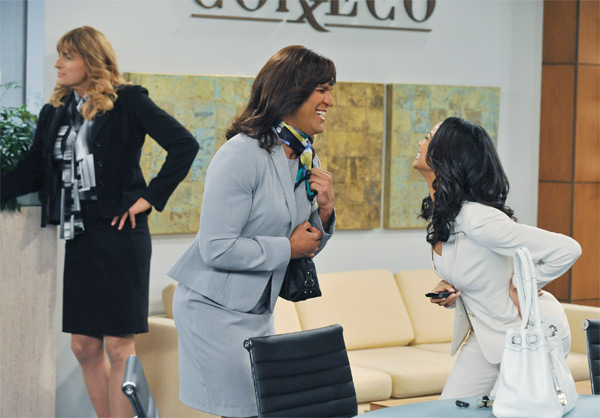
Images are taken from NBC and ABC, respectively.
August 25, 2011
Mad Men
I’m worried about “Mad Men.”
The AMC drama may seem to be doing fine – in fact, it’s the frontrunner in the race for its fourth subsequent best dramatic series Emmy. But I fear that this year may be “Mad Men’s” last chance at that prize, and really this hiatus may have permanently damaged the show’s dramatic potential.
The show has been off the air for a full calendar year now. That type of hiatus smacks of backstage drama, and creator/showrunner Matthew Weiner has provided plenty, from demanding more money to threatening the size of the cast. It’s not entirely his fault – arguments with Weiner were the first of many AMC show troubles in recent news – but Weiner may not have realized that the fate of his show gets more and more perilous the longer “Mad Men” is off the air.
This may seem unfathomable considering that more than any other, “Mad Men” is the show that has executives scrambling to find a suitable knockoff. This fall, two new shows on NBC and ABC are attempting to capitalize on the 60’s fever with primetime dramas “The Playboy Club” and “Pan Am.” The latter is even airing on “Mad Men’s” traditional timeslot – Sundays at 10pm. Both shows seem to think that merely copping the time and place “Mad Men” takes place will result in similar critical accolades. So far, “The Playboy Club” has already been almost universally panned, with most reviewers citing the elements cribbed most directly from “Mad Men” as among its weakest. “Pan Am” has fared somewhat better, but the addition of a thriller angle has weakened the chance for the pilot to develop its characters. Conversely, BBC’s “The Hour” seems to take the best elements from “Mad Men,” incorporate a bit of “Broadcast News,” and get the espionage angle right. By all accounts, “The Hour” is a smart, stylish hour of tensely plotted, quickly moving television. How is it that three shows so radically different can all have the same comparison point? Nary an article about “The Playboy Club,” “Pan Am,” or “The Hour” have neglected to mention “Mad Men” as a primary influence and a barometer of quality. What is so indefinable about “Mad Men?”
Part of the problem may be that despite its capture of the zeitgeist, “Mad Men” is still not a popular show. Unlike, say “Lost” or “The Office,” both of which spawned dozens of imitators and launched the careers of several members of their large ensembles, “Mad Men” is not commercially popular. A critical smash, yes. But even its most highly rated episodes, such as its second season premiere, only draw 2.1 million or so viewers. Most of that has to do with its place on AMC, which generally pulls far lower numbers than a major network, which frequently average 10 or so million viewers on their most popular shows. Part of it also could have to do with its slow burn pacing, where plot developments refuse to pay off until the final few episodes of the season. But mostly I think it’s because “Mad Men” is exactly the type of show people say they’re watching without actually doing it.
“Mad Men” has permeated the culture, be it through the re-emergence of mid-sixties fashion, furniture, or attitude. But what hasn’t captured the public’s attention is the actual plot and characters. Interest in the actual drama of “Mad Men” has taken a backseat to the various aesthetics and nostalgia associated with the setting and fetishized time period. The cast of once no-name actors has been able to find steady supporting parts in film and theater, but undoubtedly the most successful breakout is the indefinable essence of leading character Don Draper. The “Draper” name evokes “Mad Men’s” first season, all about setting into place the careful hierarchy But while most pop culture literates probably recognize Don Draper’s name, less probably are aware of how profoundly Weiner and crew have been diminishing the idealization of his character. Leading man Jon Hamm, handsome as he may be, has been excellent when called to show the cracks underneath the Teflon Don exterior. Those who may claim to be fans possibly don’t even know that several seasons ago it was revealed that the man calling himself Don Draper is actually a fraud, a poor backwoods baby named Dick Whitman. The show, much as it may seem to be glamorizing Draper, actually is making a case that men like him aren’t from another place, aren’t from another time – they never existed at all. That assertion is far more profound than the show is generally given credit for. The elements of the plot – adultery, lying, illicit pregnancy, and the omnipresent “big account” tend towards the soapy. But they unfold so slowly and deliberately that there is plenty of time to be critical about the status of women in the working force, or the role a distant father plays in raising emotionally fragile children. It’s disappointing that “Mad Men” will likely live or die by how long the obsession with the midcentury culture lasts, and not the strength of the characters and writing.
Now, I’m not saying “Mad Men” should be given carte blanche to continue forever. The writers and actors (not to mention the brilliant production and costume designers) need to move on, and the brief interest in 60’s reflection will undoubtedly fade. But my worry stems from the threat that this brilliant, patient, rewarding show might be overlooked and left to wither and die just as the creative people behind it are starting to disarm the glamor and style of its era and really dig into those characters, making them real, tragic human beings. With that, I am left hoping that even if “Boardwalk Empire” dethrones “Mad Men” on September 18th, that AMC can stop being preoccupied with selling the show’s flashy exteriors and just enjoy the drama when it returns in 2012.
The AMC drama may seem to be doing fine – in fact, it’s the frontrunner in the race for its fourth subsequent best dramatic series Emmy. But I fear that this year may be “Mad Men’s” last chance at that prize, and really this hiatus may have permanently damaged the show’s dramatic potential.
The show has been off the air for a full calendar year now. That type of hiatus smacks of backstage drama, and creator/showrunner Matthew Weiner has provided plenty, from demanding more money to threatening the size of the cast. It’s not entirely his fault – arguments with Weiner were the first of many AMC show troubles in recent news – but Weiner may not have realized that the fate of his show gets more and more perilous the longer “Mad Men” is off the air.
This may seem unfathomable considering that more than any other, “Mad Men” is the show that has executives scrambling to find a suitable knockoff. This fall, two new shows on NBC and ABC are attempting to capitalize on the 60’s fever with primetime dramas “The Playboy Club” and “Pan Am.” The latter is even airing on “Mad Men’s” traditional timeslot – Sundays at 10pm. Both shows seem to think that merely copping the time and place “Mad Men” takes place will result in similar critical accolades. So far, “The Playboy Club” has already been almost universally panned, with most reviewers citing the elements cribbed most directly from “Mad Men” as among its weakest. “Pan Am” has fared somewhat better, but the addition of a thriller angle has weakened the chance for the pilot to develop its characters. Conversely, BBC’s “The Hour” seems to take the best elements from “Mad Men,” incorporate a bit of “Broadcast News,” and get the espionage angle right. By all accounts, “The Hour” is a smart, stylish hour of tensely plotted, quickly moving television. How is it that three shows so radically different can all have the same comparison point? Nary an article about “The Playboy Club,” “Pan Am,” or “The Hour” have neglected to mention “Mad Men” as a primary influence and a barometer of quality. What is so indefinable about “Mad Men?”
Part of the problem may be that despite its capture of the zeitgeist, “Mad Men” is still not a popular show. Unlike, say “Lost” or “The Office,” both of which spawned dozens of imitators and launched the careers of several members of their large ensembles, “Mad Men” is not commercially popular. A critical smash, yes. But even its most highly rated episodes, such as its second season premiere, only draw 2.1 million or so viewers. Most of that has to do with its place on AMC, which generally pulls far lower numbers than a major network, which frequently average 10 or so million viewers on their most popular shows. Part of it also could have to do with its slow burn pacing, where plot developments refuse to pay off until the final few episodes of the season. But mostly I think it’s because “Mad Men” is exactly the type of show people say they’re watching without actually doing it.
“Mad Men” has permeated the culture, be it through the re-emergence of mid-sixties fashion, furniture, or attitude. But what hasn’t captured the public’s attention is the actual plot and characters. Interest in the actual drama of “Mad Men” has taken a backseat to the various aesthetics and nostalgia associated with the setting and fetishized time period. The cast of once no-name actors has been able to find steady supporting parts in film and theater, but undoubtedly the most successful breakout is the indefinable essence of leading character Don Draper. The “Draper” name evokes “Mad Men’s” first season, all about setting into place the careful hierarchy But while most pop culture literates probably recognize Don Draper’s name, less probably are aware of how profoundly Weiner and crew have been diminishing the idealization of his character. Leading man Jon Hamm, handsome as he may be, has been excellent when called to show the cracks underneath the Teflon Don exterior. Those who may claim to be fans possibly don’t even know that several seasons ago it was revealed that the man calling himself Don Draper is actually a fraud, a poor backwoods baby named Dick Whitman. The show, much as it may seem to be glamorizing Draper, actually is making a case that men like him aren’t from another place, aren’t from another time – they never existed at all. That assertion is far more profound than the show is generally given credit for. The elements of the plot – adultery, lying, illicit pregnancy, and the omnipresent “big account” tend towards the soapy. But they unfold so slowly and deliberately that there is plenty of time to be critical about the status of women in the working force, or the role a distant father plays in raising emotionally fragile children. It’s disappointing that “Mad Men” will likely live or die by how long the obsession with the midcentury culture lasts, and not the strength of the characters and writing.
Now, I’m not saying “Mad Men” should be given carte blanche to continue forever. The writers and actors (not to mention the brilliant production and costume designers) need to move on, and the brief interest in 60’s reflection will undoubtedly fade. But my worry stems from the threat that this brilliant, patient, rewarding show might be overlooked and left to wither and die just as the creative people behind it are starting to disarm the glamor and style of its era and really dig into those characters, making them real, tragic human beings. With that, I am left hoping that even if “Boardwalk Empire” dethrones “Mad Men” on September 18th, that AMC can stop being preoccupied with selling the show’s flashy exteriors and just enjoy the drama when it returns in 2012.
August 22, 2011
Black Swan (Old)
Black Swan
So, will Natalie Portman win her Oscar?
If so, “Black Swan” might very well go down as the greatest heist in cinema history.
Darren Aronosfky’s latest film, hot on the heels of his indie-inspired “The Wrestler,” draws from the director’s usual influences but adds a newer, schlockier air to create a dark psychodrama about the competitive world of a New York City ballet company.
“Black Swan” is campy horror produced with the quality of high art. That’s not a complaint — it actually gives the film the chance to shock, scare, and leave nothing unsaid. It’s all out there on the movie screen. If you have to think about it too much, it’s probably not there.
The film revolves around Portman’s character, the fragile ballerina Nina Sayers, as she takes on the role of Odette the swan princess in Tchaikovsky’s “Swan Lake.” Aronofsky states his intents early and often — not a single scene leaves Portman’s perspective, locking the audience into her shrill, overborne world immediately through a dream sequence. Though Nina wakes up, the dream never truly ends, as visions of sideways whispers and glances attack her with viciousness as the stress from the role piles up.
The movie bluntly references itself, drawing obvious parallels between the world of the ballet and the more abstract world of Hollywood ingénue. Portman may only be 29, but like Nina, she is quickly aging out of the world she has been a part of since her childhood. It has been 16 years since Portman’s first onscreen performance, and since then she has yet to truly make an impact. She has worked steadily, of course, and her name is big enough to hang this movie on. But her skills have always tended more to the precise; her roles have a practiced, rehearsed air — in the movie’s diction, they are white swans. This, this film, this performance, is her black swan. In the film’s final moments, Nina stares confidently into the camera, declaring “I was perfect. Perfect.” She might as well be addressing the Academy voters.
The rest of the film is cast accordingly — Aronofsky has always possessed a shrewd eye. Mila Kunis, a star on the rise, oozes effortless charm but lacks Portman’s discipline. Barbara Hershey had similar potential but never delivered a “black swan” performance. Her icy frustrations make her perfect as Portman’s unrelenting stage mother determined to keep her daughter a child forever. Vincent Cassel is the perfect choice for the exotic, foreign ballet director. The material he is given is somewhat repetitive, but each time he locks eyes with Portman, the whole theater shivers. But the smartest and sharpest decision was to cast Winona Ryder as Beth, the fallen prima ballerina. The character is hardly nuanced, but her fall from grace is given instant depth as Ryder’s drunken, deluded sobbing calls to mind her own, real-life collapse.
The film falters in a few places. The sound design can sometimes be overbearing — a lighter touch could have the audience jumping at every crack of a knuckle without cranking the dial up to eleven. And while watching the film unfold in two layers (the plot and the real life metaphor) was a delight, Portman’s performance may not have been as perfect as it needed to be.
Basic Instinct, Fatal Attraction—those were films about female sexuality that presented it as equally fun, unstable, and dangerous. “Black Swan” takes a similar path, showing off in Kunis’ character what Nina might have been were she not infantilized and tortured by her overprotective mother. The sex scenes in the film are cheap wish-fulfillment, an embodiment of all the virginal Nina knows to expect from it. And with a less canny director, the Kunis character wouldn’t have such a smart and confident sexuality of her own. It ensures that the film is a character study, not a comment on women in general.
The technical aspects hold up beautifully as expected. Aronofsky uses the cinematography and score to play on horror conventions like the cliché mirror-shadow scare to lead the audience deeper into Nina’s paranoid world. The CGI is sparse and well-used, mostly to blur faces or clean up the dancing.
The only fatal misstep comes in the abbreviated performance of “Swan Lake,” where Anonosfky lets the audience see the ballet. Nina’s performance there is as crucial as Portman’s is to the film. But she falls onstage, and badly, something that is clearly her fault. It makes sense in context of the scene — her fear and upset at that mistake propel her back into her fantasy world and ultimately cause her to take control of her inner black swan. In fact, that transformation is probably Portman’s best moment. It is as though she has been set free from the histrionics of the first two hours and can finally be comfortable in her skin, even as it shifts and changes visually. But that makes the final moment land with a bit of a thud. If Nina feels satisfied with her performance, feels as though it was “perfect,” than what about that first act? Regardless, “Black Swan” is enjoyable femme-horror that does its best to stay away from getting too self-consciously arty, delivering solid entertainment along the way.
So, will Natalie Portman win her Oscar?
If so, “Black Swan” might very well go down as the greatest heist in cinema history.
Darren Aronosfky’s latest film, hot on the heels of his indie-inspired “The Wrestler,” draws from the director’s usual influences but adds a newer, schlockier air to create a dark psychodrama about the competitive world of a New York City ballet company.
“Black Swan” is campy horror produced with the quality of high art. That’s not a complaint — it actually gives the film the chance to shock, scare, and leave nothing unsaid. It’s all out there on the movie screen. If you have to think about it too much, it’s probably not there.
The film revolves around Portman’s character, the fragile ballerina Nina Sayers, as she takes on the role of Odette the swan princess in Tchaikovsky’s “Swan Lake.” Aronofsky states his intents early and often — not a single scene leaves Portman’s perspective, locking the audience into her shrill, overborne world immediately through a dream sequence. Though Nina wakes up, the dream never truly ends, as visions of sideways whispers and glances attack her with viciousness as the stress from the role piles up.
The movie bluntly references itself, drawing obvious parallels between the world of the ballet and the more abstract world of Hollywood ingénue. Portman may only be 29, but like Nina, she is quickly aging out of the world she has been a part of since her childhood. It has been 16 years since Portman’s first onscreen performance, and since then she has yet to truly make an impact. She has worked steadily, of course, and her name is big enough to hang this movie on. But her skills have always tended more to the precise; her roles have a practiced, rehearsed air — in the movie’s diction, they are white swans. This, this film, this performance, is her black swan. In the film’s final moments, Nina stares confidently into the camera, declaring “I was perfect. Perfect.” She might as well be addressing the Academy voters.
The rest of the film is cast accordingly — Aronofsky has always possessed a shrewd eye. Mila Kunis, a star on the rise, oozes effortless charm but lacks Portman’s discipline. Barbara Hershey had similar potential but never delivered a “black swan” performance. Her icy frustrations make her perfect as Portman’s unrelenting stage mother determined to keep her daughter a child forever. Vincent Cassel is the perfect choice for the exotic, foreign ballet director. The material he is given is somewhat repetitive, but each time he locks eyes with Portman, the whole theater shivers. But the smartest and sharpest decision was to cast Winona Ryder as Beth, the fallen prima ballerina. The character is hardly nuanced, but her fall from grace is given instant depth as Ryder’s drunken, deluded sobbing calls to mind her own, real-life collapse.
The film falters in a few places. The sound design can sometimes be overbearing — a lighter touch could have the audience jumping at every crack of a knuckle without cranking the dial up to eleven. And while watching the film unfold in two layers (the plot and the real life metaphor) was a delight, Portman’s performance may not have been as perfect as it needed to be.
Basic Instinct, Fatal Attraction—those were films about female sexuality that presented it as equally fun, unstable, and dangerous. “Black Swan” takes a similar path, showing off in Kunis’ character what Nina might have been were she not infantilized and tortured by her overprotective mother. The sex scenes in the film are cheap wish-fulfillment, an embodiment of all the virginal Nina knows to expect from it. And with a less canny director, the Kunis character wouldn’t have such a smart and confident sexuality of her own. It ensures that the film is a character study, not a comment on women in general.
The technical aspects hold up beautifully as expected. Aronofsky uses the cinematography and score to play on horror conventions like the cliché mirror-shadow scare to lead the audience deeper into Nina’s paranoid world. The CGI is sparse and well-used, mostly to blur faces or clean up the dancing.
The only fatal misstep comes in the abbreviated performance of “Swan Lake,” where Anonosfky lets the audience see the ballet. Nina’s performance there is as crucial as Portman’s is to the film. But she falls onstage, and badly, something that is clearly her fault. It makes sense in context of the scene — her fear and upset at that mistake propel her back into her fantasy world and ultimately cause her to take control of her inner black swan. In fact, that transformation is probably Portman’s best moment. It is as though she has been set free from the histrionics of the first two hours and can finally be comfortable in her skin, even as it shifts and changes visually. But that makes the final moment land with a bit of a thud. If Nina feels satisfied with her performance, feels as though it was “perfect,” than what about that first act? Regardless, “Black Swan” is enjoyable femme-horror that does its best to stay away from getting too self-consciously arty, delivering solid entertainment along the way.
Subscribe to:
Posts (Atom)