December 24, 2011

Always Sunny Season Seven: A Retrospective


“It’s Always Sunny in Philadelphia” just finished its seventh season, and the results have been mixed. Never before has it felt as though the show careened so wildly between brilliance and boredom, instead offering a steady diet of laughs throughout its three months of airtime. But what we have this season is a mix of episodes that would rank among the show’s best, and an almost equal amount that would be considered the show’s worst.

The season started out strong with “Frank’s Pretty Woman,” less a parody of the Julia Roberts romantic comedy than a total annihilation of it. Any episode that throws in the phrase “tighter than dick skin” and ends with a hooker lying dead outside of Charlie’s apartment surely counts as a series high, especially for a season premiere. After last season went out spectacularly with the end of Dee’s pregnancy storyline and “A Very Sunny Christmas,” this episode proved that the show was suffering no creative setbacks at the start of the new year.


Next up were “The Gang Goes to the Jersey Shore” and “Frank Reynolds’ Little Beauties,” two solid episodes that were elevated by a handful of great lines and typically strong performances. It also marked the return of side characters like Artemis and the Waitress, checking in on where they are at the start of the new year (for Artemis, much the same, and for the Waitress, doing ecstasy on the Jersey Shore, a new all-time low). For a show that only gets a few scenes for auxiliary players per season, these two episodes did a good job of using the two actresses and reminding the audience how deep the bench goes for this show.

“Sweet Dee Gets Audited” should have made more of an impact, considering it ends with the characters saying this is the “darkest thing we’ve ever done.” That thing is staging a fake funeral for the baby Dee gave up for adoption at the tail end of last season. It’s always amusing to see Dee’s delusions of cleverness crushed by reality, but the background to this whole episode – an attempt at democracy manipulated by Frank and Dennis to get the bar decorated to their liking – is pretty flat and uninspiring. In fact, the Dee plot would have probably worked a bit better as a B-story, because the baby’s funeral really doesn’t provide that strong of a conclusion for the episode. And while it may be dark, the show is careful to introduce another character (the IRS agent auditing Dee) to react with suitable human disgust and horror when the whole thing goes wrong and the “baby’s” casket is opened to reveal the rotten corpse of a dog from the alley next to the bar. Shame that an image like that doesn’t leave more of an impact.

But following that strong opening four, “Frank’s Brother” showed that there is a limit on what the show can do. I personally enjoyed “The Gang Cracks the Liberty Bell” and “The World Series Defense” for their chance to hear the storytelling ability of the characters. Each paper-thin character or anachronistic phrase made perfect sense coming from Charlie, Dennis, Mac, and Dee. But Frank’s story is meant to be true, so when things don’t add up, it feels like a cheat – the writers aren’t playing fair. Sure, it’s funny to imagine that the mid-60’s Danny DeVito “looks like a 12-year-old,” and seeing that the name “Shadynasty” spelled out makes up “Shady Nasty,” but a few jokes like that can’t make up for a plot that ultimately goes nowhere and has nothing to do with Frank’s brother at all.

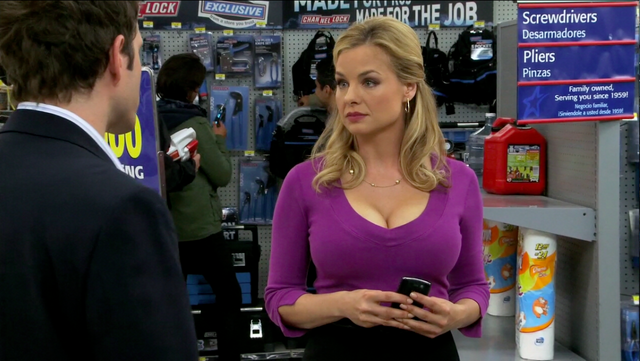
“The Storm of the Century” was purely mediocre. As an episode it barely hangs together, working much better as a series of funny scenes and concepts. The hurricane framework, especially considering Hurricane Irene did indeed bypass the Northeast with little incident, lends almost no urgency. And benching Mac for the lion’s share of the episode, even if it is balanced by the punchline of seeing him sitting safely without the Gang, eating ice cream and watching television from the bar, leads to a mismatched ensemble. Dee’s shrill fear of the storm returns her to the less dynamic shrewish archetype she hasn’t played since the first season. Again, this is subverted by the ending of the episode, but that doesn’t make her come across as any funnier. Charlie and Dennis have some spectacular material when they pursue a large-breasted TV anchor and later a few young attractive women shopping in a Home Depot-like home improvement store, but it works better as six or seven isolated minutes rather than as the A-story in an otherwise underwhelming 22 minutes. However, I will admit that this sends Dennis on a fantastic arc this season – and I believe his unhinging all starts here, when he is rejected by the news anchor and the young girls shopping for disaster supplies. His barely contained disgust for himself and the three women is as unsettling as it is funny.
“CharDee MacDennis: The Game of Games” was pure brilliance from nearly start to finish. It’s one of dozens of bottle episodes “Sunny” has done over the years, restricting the action to the bar and stripping away all characters not in the Gang. This season has proven that this tried-and-true formula is far from tired. In fact, it’s still where the most innovation can be done. This episode probably packed in the most jokes, the most character beats, the most callbacks out of any other episode this season (aside from the two-part finale, which I’ll get to in a moment), and it did so without leaving the confines of a single room. When you get down to it, “Sunny” doesn’t do alternative structure as well as many other comedies, but it does laugh-out-loud character comedy better than almost all of them.

Next up was “The Anti-Social Network,” another largely inconsequential episode held up by Dennis’ madness. Aghast at the thought that a random gin bar patron “shushed” him, Dennis drags Charlie along on an elaborate plot for revenge. Mac and Dee split off, looking for the “shusher” via Facebook in what turns into a “Catfish” parody. “Sunny’s” pop culture parodies have never been one of its stronger elements, so it’s no surprise that Dennis’ fury is far more fruitful than Mac and Dee’s unraveling of a vast online conspiracy. As he and Charlie enlist the help of the gin bar owners, the police, and a street cartoonist to help them track down the “shusher,” they become more and more wrapped up in their righteous fury. Charlie becomes fixated on the “shusher’s” “almond shaped eyes,” which can be added along with “people’s knees” to the list of physical attributes that drive him crazy. Dennis, on the other hand, reacts with an eerie determination. He will not stand to be insulted. Again, this just serves to build the intensity behind Dennis’ murderous edge.


The following episode, “The Gang Gets Trapped” might just have won the crown for my all-time least favorite “Sunny” episode. Once again, I appreciated their attempts to mess with typical structure, but it doesn’t quite work. Rather than have a long buildup to a bad idea, with all five characters at varying levels of interest and commitment, the episode cuts straight to the fallout. The opening finds Dee and Dennis trapped in a woman’s closet as she packs for a trip, after sneaking inside to steal an artifact her family won in an auction. It’s clearly intentional but no less disappointing that the characters pay lip service to Dennis’ passionate speech in favor of breaking in, or Mac and Charlie’s piqued interest due to a recent obsession with Indiana Jones. The whole thing feels like it takes place in the interim between the hilarious setup and the impact punchline. And while it might be a fun exercise for the writers to imagine what the characters get up to in between their outsized antics, it results in a rather unfulfilling half-hour.

Perhaps the most disappointing was “How Mac Got Fat.” With a title like that, you could expect that the show would go wild. But the episode is actually repurposed footage from an aborted attempt at a script from season six. On first pass, the episode seems very funny, taking a tour of Mac’s fractured psyche, from his staunch Catholicism to his oddly homoerotic fascination with fitness and muscles, to his delusional self-image, to his impatience – all things that are ripe for laughs. But on second watch, the structure actually seems rather sloppy, relying on Mac’s confession as an expositional monologue forcing the bits and pieces from the old footage into the framework of this new story idea. Only the smaller things on the sidelines – the candy stuffed in Mac’s pockets as he reveals his newly fattened physique or Charlie’s turpentine-fueled dance in the back office as Dennis watches with a glassy, drugged out stare - land. Perhaps the show only needs to make the audience laugh, but with so few episodes per season, I’d prefer they focus on making episodes I can laugh at time and time again, not just once.

Things looked up the following week with “Thunder Gun Express,” a fun adventure around Philly featuring actual location shooting as the Gang attempt to make it to the action movie of the year. What worked well about this half-hour was the pairings and isolation of the different characters. Mac making fun of Dennis’ slow, methodical, needlessly creepy way of picking up girls spurs Dennis on to listen to the collection of tapes (tapes!) he’s made of his various romantic encounters, actually having a few moments of self-reflection. Of course all that’s undone in a moment when a good looking woman presents herself and Dennis reverts to his tried-and-true ways. But even that’s upstaged by the adventures of Mac, Dee, and Charlie after they leave Dennis stranded in traffic in order to get to the theater more quickly. For once, the writers take Fat Mac into consideration and leave him stranded on the sidewalk after Charlie and Dee slip through a narrow grate into the sewer. Frustrated and preoccupied with the thoughts of action heroes, Mac spies a nearby motorcycle and tries to ride off on it. The resulting sight gag is worth the price of admission. Meanwhile, in the sewer, Dee becomes trapped when her shoe gets caught in the ground. Best line? When Dee asks Charlie if she can just take his shoes until they get back up to dry land, he stubbornly refuses. “You’ll stretch them out!” he insists. “You’ll stretch them out.”

After careening so unpredictably throughout the season, the once promising idea of the Gang’s high school reunion approached as I faced it with trepidation. Sure, it looked like there would be plenty to look forward to, but when finding out about Frank’s past or the whole concept of Fat Mac fizzled out, it looked like high concepts were the kiss of death for “Sunny” episodes that made me laugh. Fortunately, the full hour made sure there was plenty of time to deliver on such a loaded premise. Callbacks bring back plenty of recurring characters like Rickety Cricket, plagued with wicked cases of ringworm and kleptomania, Fatty Magoo, looking prettier than ever, and the Waitress, pathetically wandering around in the background, drunk and disappointed.

Hitherto unseen aspects of the characters were finally revealed. Dee is forced to don her torturous back brace, looking like something out of the early twentieth century, literally prohibiting her from any effortless movement, from turning her head to shrugging her shoulders. Finally, we learn Mac’s real name – a little bit of a letdown after so many years, but hey – and it turns out to be Ronald MacDonald. Luckily, the show knows not to stop there and also reveals that Mac was a rotten little snitch nicknamed “Ronnie the Rat.” Charlie devolves back into the unconfident, sniveling “Dirt Grub,” humiliating himself at every turn in order to somehow appeal to his more popular peers.

All that is upstaged by the climax of Dennis’ mania, which comes to a head after encountering the jocks who never respected him and the former friend he believes once slept with his prom date. When he fails to ingratiate himself or get revenge on them, his resulting fury is terrifyingly hilarious. Entering into a psychotic breakdown, he actually reveals what was always implied – a trunk full of creepy sado-masochistic gear that somehow includes both a camcorder and zipties. The rest of the Gang (as put off as the audience, though unable to find it as funny as we can) quickly talk him out of using “his tools” against his rivals.

Nothing, however, can outdo the final few minutes for pure humor. Throughout the hour, the Gang speaks reverently of their “Plan B,” only to be deployed under the direst of circumstances. When those circumstances are more than met, they are forced to go through with it – even though, as Dennis exclaims, it’s only a dance routine. But from top to bottom their manic, passionaite performance is hysterically funny - and that's before their delusions crash down around them, and everyone else at the reunion heads off to what sounds like a wicked afterparty. Once again, the Gang is left alone to go back to the bar. Back to the status quo.


Two more seasons have already been confirmed by creators and stars McElhanney, Day, and Howerton. Hopefully they can avoid some of the pitfalls they stumbled into this year. But despite this season’s weaker offerings, at no point has it felt as though the characters were weak or their chemistry diminished, but rather that what once seemed like endless possibilities for episodes wasn’t quite so endless after all.

December 4, 2011

It’s Broke; Please Fix It

Why I can’t stand the success of “2 Broke Girls.”


Television naturally demands a hearty suspension of disbelief, no form of which more so than the three-camera sitcom. It feels a bit stale, with hangovers from theater and radio in the tone, style, and performances. However, that does not mean three-camera shows can’t be relatable. Think of “Cheers.” Think of “Seinfeld.” The form itself is no more inherently flawed than any other. So when critical complaints are heaped on CBS’ new fall sitcom “2 Broke Girls,” my eye doesn’t go to its studio audience, its limited number of locations – some of the best shows in television history have made those elements work to their advantage. And the template for shows about young professionals working in New York City, “Friends,” was also a three-camera show. But “2 Broke Girls” has dozens of other problems, all of which stem from character, writing, and structure.

The devil’s in the details, as they say. “2 Broke Girls” continues to only make it halfway to accurate. There is a fundamental misunderstanding what it’s about to live as a young person in New York City, especially one with very little money. Michael Patrick King, the showrunner, served many, many years on “Sex and the City,” and he was effective there, providing an escapist fantasy for non-city dwellers while being careful to keep the geography accurate for sharp-eyed natives. However, there he was dealing with characters living like the upper class, even if they never identified themselves as such. Here, the characters pay constant lip service to their poverty, but King does not know what stories, attitudes, and behaviors organically rise from this situation. Being young and broke in New York has plenty of inherent drama. Think – the same stories from shows like “Friends” or “How I Met Your Mother,” stories of love, work, and friendship, still apply, but with the added stakes of money and circumstance. Impressing that new wacky boss becomes a necessity if you can’t quit your job after 22 minutes. An annoying landlord on a quest for the rent becomes the only thing standing between you and life on the street. The situations are ripe for comedy, particularly, in my opinion, farce. The very best farce – with humor that can be as broad as the side of a barn – comes from urgency. Necessity. Pacing. The more a character needs something, and the more that necessity contradicts the needs of other characters, the funnier the farce becomes. “NewsRadio,” one of the better and more overlooked sitcoms from the 90’s comedy boom, played as a wonderful farce in its three best seasons (the ones right in the middle of its five-year run). How did it do so? By establishing each member of its eight-person ensemble as a distinct personality, always looking for something specific. When each of these needs came in conflict with one another, the jokes flew faster and so did the laughs. So far “2 Broke Girls” has set the stage for farce but failed to deliver in pretty much every way.

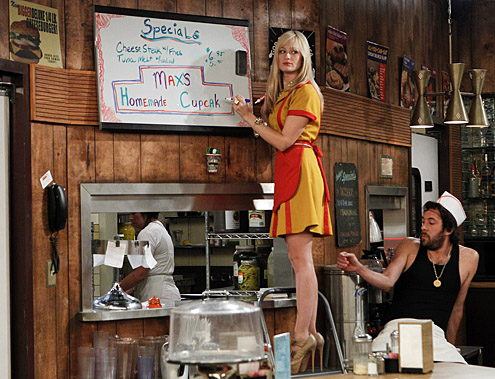
The two leads, Kat Dennings as streetwise Max and Beth Behrs as sheltered Caroline, are fine, and their friendship (and business partnership) could be enough to hang a show on. In fact, “Laverne and Shirley” did just that for plenty of years. But just like that lowest-common-denominator show, “2 Broke Girls” is soft around the edges, relying on easy gags about the characters being female, having sex drives, and any number of unappealing sounds, smells, or sights in downtown Brooklyn.

The supporting characters are all on the miss side of hit-and-miss. Each attempt at developing a character who is not a young white female has been a wild miscalculation. Garrett Morris proves what a funny person can do with paper thin material, but his character still only gets about ten seconds of stereotypical jokes about being old, black, and cool per episode. Though he’s been set up as a surrogate father for Max, he’s yet to display anything more than polite concern for her well-being, let alone any advice or comfort. The other supporting characters – all of whom are male, actually – are also given next to nothing to work with. Michael Moy is forced to adopt a fake Korean accent and an embarrassingly nerdish demeanor, dropping jokes about his Tiger Mother and changing his name to “Bryce” (get it? It sounds like “rice,” a food Koreans are partial to) in order to become more American. Worst of all is Oleg, the lecherous line cook. With only a few seconds, he manages to fit in an hour of discomfort, with his obnoxious and unreturned sexual advances. Paired with a vaguely Eastern European accent – Ukrainian, according to the exposition – Oleg challenges the viewer to keep watching with his noxiously perverted one-liners.

Poverty is not inherently funny. But wealth is not inherently funny either. Economic realities are not, in general, inherently funny. What’s funny is watching loveable characters navigate those realities in ways that stem from real emotions, but can get outsized, crazy, and weird because of their place in a fictional universe. But no matter how wacky their antics get, their motivations and impulses have to be logical and relatable. “2 Broke Girls” is rarely logical. In fact, the jokes fall apart so quickly simply because of the lack of logic. In the first episode, Caroline and Max sneak uptown and steal Caroline’s horse. They bring it back to Brooklyn and put it in their backyard. The giant horse in the tiny Brooklyn patio is a decent sight gag. But each successive episode has kept the horse there! This is so stupid it boggles the mind. The title of the show references how poor the leads are. Are the writers unaware of how expensive it is to keep at horse fed and taken care of? Are they unaware of how much time that takes? Are they unaware of how much exercise a horse needs per day? I know I was. But then I spent three minutes researching on the internet. The information is there, and it readily contradicts any chance that “2 Broke Girls” is taking place on planet Earth. There are plenty of little things, too – the anachronistically graffiti’ed subway cars from the mid-1980’s, the girls wasting money on five-dollar Starbucks lattes when they work at a coffee slinging diner, the constant references to hipsters when no one seems sure of what a hipster is – it’s all frustrating. And it all drags the viewer out of the show and, at least for the astute TV-watcher, into a more critical mindset. Similar problems surely dogged other shows over the years. But small inconsistencies can be overlooked when balanced by great jokes.

And here’s the biggest problem of all – “2 Broke Girls” isn’t funny. Dennings and Behrs both seem aware of what a joke is, and how to tell one. But neither one has been handed a genuinely well-crafted one so far. Most of the humor relies on sarcastic puns, repeating what another characters has just said, the word “hipster,” or some kind of tripping, slipping, squirting, or splashing. There’s plenty of sexual content, but it’s all crude and mean-spirited. Unlike the best blue comedies, like “It’s Always Sunny in Philadelphia,” there’s again, no strong sense of character behind it. Instead, every character is either shamed for having a sex drive or shamed for not having more of one. The girls don tight shirts and short skirts in what seems like a desperate attempt to retain male viewers. The girls put down every male in sight in hopes of appealing to female ones. But what appeals to viewers of all types is humor that arises from universal experiences, understandable reactions, or a complete and utter subversion of them. You cannot prompt the audience to worry about whether or not Max and Caroline will get a new electric mixer when the denouement of the episode finds them doing a gross, sexually charged take on Lucille Ball’s famous chocolate-wrapping routine. The comparisons do not favor “2 Broke Girls.”

“I Love Lucy” was probably the last and best example of a show that could combine farcical comedy with realistic family stakes. Perhaps it was lent some level of empathy because the audience knew Ball was married to her onscreen husband Desi Arnaz. Perhaps gender politics of the time made Lucy’s increasingly ridiculous schemes feel more realistic. But my prevailing theory is that when “I Love Lucy” aired, audiences found it the funniest show on television. But with so much fantastic comedy on TV right now, hopefully audiences will come to their senses and realize there is more to choose from than “2 Broke Girls.”

October 23, 2011

Returning/New Shows September 26-30


Returning Shows MONDAY, SEPTEMBER 26

How I Met Your Mother:
The third episode in HIMYM’s seventh season enters into a pantheon of top-tier three-camera episodes, full of zig-zagging timelines and a resumption of Ted’s romantic woes in a refreshingly consistent way. The plot pings back and forth between Ted’s meeting with Victoria – told as a story within a story – and the gang’s travels to Marshall’s favorite restaurant, where Barney plots diabolically to figure out a way to fondle Lily’s pregnant breasts.

The episode is delightfully quaint. Some of the best episodes in the show’s history (including probably the best full stop, season two’s “Slap Bet”) have used this dynamic, grounding Ted and Robin in the real stakes while Barney, Lily, and Marshall run circles around them. And these two threads, and the places where they cross, provide tension, snap, and plenty of humor this week.

Victoria, Ted’s first true love in the series, has returned momentarily. It’s a nice chance to see how far Ted’s character has come since then. The writers may have neglected him at times over the years, but overall Ted can now easily tell that he isn’t meant to be with Victoria, while in earlier seasons he may have spent many more episodes trying to win her back. After much of Ted’s audience goodwill was lost after the Zoey debacle last season, it’s good to see a return to the much more likeable and relatable character of Ted. In fact, this season, only three episodes in, may do for Ted’s character what the sixth did for Marshall and Barney’s.

2 Broke Girls:

“Rude, crude, and in a bad mood” describes “2 Broke Girls’” second episode so cornily well that not much else can be said. This episode is a complete and total retread of the first. Rather than use the pilot to determine which elements of the show are working and which are failing, instead the second episode goes through the same motions again. One scene with Garrett Morris’ vaguely charming cashier? Check. One scene where the lecherous cook overhears a personal conversation and uses it as an excuse to imply a lesbian relationship between the leads? Check. A scene where the token dumb socialite mother insults the appearance of her children? Check. The only new element added this week was a crass joke about Beth Behers’ character falling in horse crap.

However, even that broad gag fell completely flat when any sense of urgency was stripped from the premise in the third act. Even the labored setup in the first few scenes, where Caroline remarks several times that she only possesses one set of clothing and that Max’s apartment has no water, results in no payoff whatsoever. Instead of building tension when Caroline has to sneak into Max’s babysitting job to shower, instead there is a cut to a later scene and the characters talk about what happened in the interim. Sloppy writing is hardly worthy of hope, and “2 Broke Girls” needs to do something new soon.

Returning Shows TUESDAY SEPTEMBER 27

Glee:

Another episode of “Glee,” another uneven attempt to provide some continuity in the rapidly shifting and growing universe. The “Glee” world seems to consist solely of characters with a Deep, Dark, sordid history that relates to whatever crisis the leads are going through this week. It’s hard to care about the ailment of the week, or problem of the week, or romantic entanglement of the week. So much of “Glee” depends on what week it is. Themes and songs line up conveniently.

Idina Menzel’s competing choir director has returned, bringing with her hanging plotlines left over from the first season finale. The aftermath of Quinn’s pregnancy, Puck’s battle to stay relevant in his daughter’s life, and Rachel’s feelings of abandonment are all dragged up by Menzel’s return. Hopefully, this isn’t the last we see of her character until next season.

The Quinn plotline seems to have shaped itself into something new already. Once again, Quinn has pledged to another character that her sweet, bland exterior is only an act, and one that obscures her truly sinister undertones. This time, she somehow wants to get her daughter back. The character is certainly in for a rude awakening when she finds out adoption is legally binding, and unless the show is willing to show months and months of slow-moving legal action, this plotline is heading nowhere fast.

More interesting is the direction they’re taking Kurt this year. Last year, Kurt was played handily by Chris Colfer as sympathetic if overly sanitized, losing the biting edge that made him complex in the first year. All last year, Kurt was told over and over again to celebrate his differences, encouraged to stand out as much as he could. Now, he’s seeing that while pride is a wonderful quality to have in life, it may not be the best way to gain acceptance in the theater world. Despite drawing largely gay men, the musical theater scene is still based primarily on heterosexual love stories, with male leads needing to at the very least pass as traditionally masculine and straight. Kurt, try as he might, cannot do so. This struggle is something Kurt truly has to come to terms with, and while I do not like that Burt, his supportive father, has encouraged him to write his own material instead of try to overcome this obstacle, here’s hoping this is not abandoned as the season continues. The songs this week are actually tied together in a subtle “West Side Story” homage, but thankfully this is not hammered by the writers and instead just serves to tie together an otherwise far-reaching episode.

New Girl:

After terrible second episodes to shows such as “2 Broke Girls,” the pilot to “New Girl” has ascended to the pantheons of “not offensively bad” in my mind, so expectations were at that bar for the second episode. Fortunately, that low-hanging achievement was met by last night’s episode, which also suffered some retread from the pilot but managed to stay enjoyable throughout. And as time passes, “New Girl” becomes rosier and rosier in my mind.

Notable was the absence of Damon Wayans Jr., whose awkwardly bad-tempered Coach flirted with caricature but was well-played nonetheless. Instead he has been replaced by Lamare Morris, essentially replacing the same role in the ensemble that Wayans did. Morris luckily has a low-key energy that does not trend towards urgency very well but doesn’t grate like Greenfield’s Schmidt can occasionally.

The show takes its inspiration from “How I Met Your Mother” with its relationship theorizing and snappy catchphrasing. The writing isn’t bad, but scenes on top of scenes where characters sit around and talk play significantly better in a 3-camera set than a single-camera one. It’s a good inspiration for the writers – the first few seasons of that show had great ensemble work and good writing. But copying that voice is not enough. “New Girl’s” next challenge is to find something unique within its universe. And hint – it is NOT the assortment of oddities plaguing Jess. In fact, step one should be to ground her somewhere in reality.

THURSDAY, SEPTEMBER 29th

The Office:

Given the Thursday night comedy landscape, an old horse like “The Office” can no longer keep up. In its second episode of the season, it’s clearer than ever that the wheels on this show are spinning. James Spader’s character Robert California is no more solidified than he was last week. While there’s no shame in having an enigmatic character whose motives are questioned, the other characters solely react to him with fear and intimidation because he’s the boss. So far he manages the office with sharp honesty and calm. His approach might be welcome on the show, which has been plagued by the ineffective managerial stylings of Michael Scott.

But Scott, for all his flaws, made sense as the boss in certain ways. He was far and away the best salesman on the staff, and his touchy-feely let’s-be-friends approach may have alienated some of his underlings, but in the end garnered people with genuine respect for him. Andy Bernard is hardly as complex as Michael Scott. Andy is a walking embodiment of just how far one can coast on privilege without any discernible skills. He’s managed to float to the top of this (moderate) corporate pyramid by being a terrible salesman, unqualified, and one of the younger candidates. Andy is also kind and generous, which gets him into a bind when he pledges that he’ll get a tattoo if the office is able to increase their profits.

Parks and Recreation:

Rarely is it a good idea to give a powerfully mysterious character backstory. Often it can eliminate any sense of surprise; as more is explained, less becomes compelling, tragic, or funny. Fortunately for “Parks and Recreation,” Ron Swanson is so powerful that even with the addition of Tammys 1 and 0 and a significant backstory, he remains a compelling character. Most of this is due to Nick Offerman’s unbelievable work.

The B and C stories this week are good, if slight. Ben’s travails with Entertainment 720 further illuminate how quickly this start up business is going to fail, and does some nice work humanizing Tom, preparing the audience for his inevitable return. Without Ben and Leslie able to stay in a relationship, it helps to give Ben something more to do, and his friendship with Tom is a good choice. None of the other characters so far have had a meaningful relationship with Tom, and deepening his character by having him realize that the shallow dreams of tossing around money without having worked for is immature.

Rob Lowe does a wonderful job playing off of the exasperated Rashida Jones in the featherweight C-story about the two filming a PSA on diabetes. There’s not much more to it, but it’s pleasant to see Lowe playing a poor improviser, very similarly to how Alec Baldwin feigned terrible flopsweat and panic in an early episode of “30 Rock.” It’s also nice to see Jones acknowledge the two characters’ relationship from the previous season. It’d be nice to see Chris’ near-psychosis pay off in some way as the season goes on, but even if it doesn’t, this still added to one of the best episodes of comedy so far this fall.

But no matter what happened on the sidelines, this was a Ron Swanson episode, pure and simple. Offerman swaps deftly between the hyper-masculine, typical Ron, a wary and fearful Ron, and the post-Tammy 1 emasculated, wimpy Ron. It’s the type of performance that garners Emmy nominations, and if it’s being burned off as the second episode, there must be fantastic things ahead for Ron and the rest of the crew. The final setpiece, a “Prairie Drink Off” between the Tammys and Leslie, gets extremely broad, but remains hilarious because the stakes are so high. Ron Swanson as we know and love him in danger, and both Tammys wish to get their claws into him and make him their own. Leslie, while a noble participant in the contest, is no match for the ice cold Tammy 1, the squat and sturdy Tammy 0, or the moonshine they’re drinking (even April, a proud Puerto Rican, can’t stomach a single mouthful). But when Leslie dissolves into a truly tragic drunken stupor just so Ron can continue to be who he really is, it inspires something in the temporarily un-mustachioed Swanson. He gains the conviction to down the bottle of moonshine and win the contest himself, dictating sharply that he wants to banish the Tammys and reclaim his identity as Ron Fucking Swanson. The audience wouldn’t approve of any other way.

Community:

Britta and Annie return to their own pasts this week on “Community.” Annie is sent back to high school when another hyper-competitive Annie tries to steal her thunder, while Britta finds herself in a push-pull flirtation with Chang the security guard and civil disobedience.

Frankly, the conclusion to both of these storylines is more hackneyed than is typical for
Community” fans. Britta’s final, absurdly ineffectual gesture is baffling by design, but still doesn’t have much impact. Hopefully this thread will not remain untied as the season goes on. While Britta thus far has been characterized by emotional arrested development, her coming to terms with her past could be played with sophistication. She also tells Shirley in the first scene that she’s decided to study psychology. Perhaps some self-analyzing will ensue.

The same goes for Annie and Jeff returning to their debate roots in a Model-UN-Off where they only manage to win by using a quick combination of Jeff's lawyer skills, Abed's pop culture acumen, and Annie's insaceable need to defeat her rival - the Asian and equally ambitious Annie Kim. Martin Starr appears as their Professor Cligoris, singlehandedly disproving that there are no funny names.

Not every episode of "Community" can provide the sturm and drang of "Modern Warfare," "Epidimediology," or even "Critical Film Studies." Instead this is another slightly underwhelming week of setup. It does prompt the careful veiwer to note Britta's impending quarter-life-crisis and Annie's surprisingly over-the-top temper tantruming.

Whitney:

Another weak episode of “Whitney.” Certainly no surprise. This may have already locked up the spot for worst fall show. It also singlehandedly proves that you cannot have your cake and eat it too. Want a show about a mildly neurotic single girl trying to navigate big-city dating? Then don’t spend your pilot dictating that the two lead characters have been in a five-year relationship. Want a realistic look at the ins and outs of unmarried adults in a long term relationship? Then don’t send the female protagonist into a panic every few minutes about the dangers of not being in the honeymoon stage indefinitely. What “Whitney” needed to do this week was give example of something that could be a typical conflict for these characters. Explain why their jobs are important. Give some context to their friendships. Sitcoms live and die by their characters and jokes. Even on the lamer popular shows, these are the elements that people respond to. Sitcoms do not live or die by the platitudes they spout, but that’s where “Whitney” is spending its energy.

No longer having Cummings’ hour special to work from, this episode settles on old observations from previous seasons of “30 Rock” and nothing else. No jokes. Most of the humor supposedly should come from D’Elia’s generic boyfriend character acting genuinely baffled at the mood swings and general mental illness of his terrifyingly unpredictable girlfriend, but his rational behavior – at least at first – is completely understandable. The episode actually switches focus at the midpoint and begins to focus on D’Elia after Cummings becomes frustrated and kicks him out. Is this meant to be a show with a dual protagonist? While D’Elia is less grating a personality than Cummings, that’s simply because he doesn’t have much of a personality at all. When he is convinced by his crass cop friend to go along with Cummings, who wants to do an extended role-play that the two have just started dating, the episode loses any semblance of a sympathetic character.

Once again, rather than introduce complications or conflicts, the show resorts to Cummings dressed in slutty outfits. In fact, it comes earlier in this episode than in the pilot. And in order to do better than the last, they add an underwhelming girl-on-girl kissing scene meant to be titillating. It comes across as crass and desperate. Same goes for the conclusion, where the two adult leads – who are in a relationship – get back together. It’s a result without weight, and thus has no emotional impact. The clock is ticking on “Whitney.” Hopefully it will be replaced by the already superior “Up All Night” at midseason along with “30 Rock.”

Project Runway:

It’s back to drama drama drama on “Project Runway” this week. In the first ten minutes, Anya manages to use her pageant training for some excellent waterworks when she misplaces her envelope of fabric money. Vicktor passive-aggressively makes snide remarks about Josh that implies cheating. Burt faces extra scrutiny because he’s the only designer remaining who even lived through the 70’s. The other girls decide not to tell Kimberly that they think her ensemble is tacky in order to get her sent home.

But after last week’s disaster challenge, at least this week is somewhat compelling. Of course, plenty of the designers end up with disastrous looks, and the constant praise for Anya’s mediocre sewing and Josh’s spangled nonsense has become predictable and boring. Even Vicktor, the only remaining contestant who continues to surprise or intrigue with his work, is scrambling to come up with bon mots in the talking heads. Playing the game of “Project Runway” has become a game all the contestants are hip to, and while it’s still possible to laugh at their efforts, it also removes some of the fun.

Archer:

The conclusion of “Heart of Archness” is upon us. Too tragic, that there won’t be any more of this wonderful show until January 2012. But, until then, there’s not much to say. This hour and a half of material has been a wonder to watch, is funny as hell, and while it may have seemed fitfully structured when split up by commercials and full weeks, it’ll play like gangbusters if released as a straight-to-DVD feature.

The best business in this conclusion comes from character. Archer in particular. Over the past two years, Adam Reed has given his leading man enough hilarious quirks, idiosyncracies, and details to propel this whole story to a firey, helicopter-dangling, lacrosse-playing, fantastic end.

How to be a Gentleman:

There’s no show I wish I enjoyed more than “How to be a Gentleman.” It comes from the mind of David Hornsby, better known as the frequently t-bagged Rickety Cricket from “It’s Always Sunny in Philadelphia.” After serving as a producer and writer on that show, Hornsby has collected plenty of comedic ringers for his ensemble sitcom. Rhys Darby from “Flight of the Concords,” Mary Lynn Raksjub from “Mr. Show,” and Dave Foley from “Kids in the Hall” each have made television comedy history with their great work. All three have also done their own writing, and probably could have contributed something more original to their characters. Unfortunately, all three come across as disappointingly generic. But respect must be given to Hornsby, for he was no doubt a reason why these talented people chose to join the show.

The only weak links in the cast seem to be more CBS inspired than Hornsby inspired. His co-lead is “Entourage’s” Kevin Dillon. Dillon is doing what he did for years on that show, playing his crass, brash “Johnny Drama” persona with little subtlety. Almost as collateral, Hornsby is playing very quiet with his character. Perhaps this is due to his years working on a single camera sitcom, but it comes across as flat and boring. He’s almost as bad as Dillon, and their relationship is meant to center this show. The other uninspiring element is Hornsby’s neighbor/love interest of the week. She was previously featured on “How I Met Your Mother” as the borderline psychotic “Blah Blah.” Her character here could have the same name, but has none of the flair.

Maybe “How to be a Gentleman” will gain momentum once Hornsby gains his 3-camera voice and figures out how to write for his talented cast. But, as of now it is disappointingly characteristic of CBS, not of the people involved.

Community S3E3

A lot has been made of "Community's" last episode. But before I look at that episode and the upcoming Halloween anthology next week, I thought I would look back at what seems like a very pedestrian half-hour but actually serves as excellent setup and builds characters wonderfully well.


This episode provides a good chance to talk about some of the minority characters in “Community.” While Jeff, Pierce, Britta, and Annie have been fleshed out nicely over the past two years, maybe this is the time for the primarily white writer’s room is finally confident enough to dive into the rest of the multicultural Greendale gang.

Community’s third episode of its third season follows the seven members of Greendale’s study group as they attempt to split into pairs of lab partners for their semester of Biology 101. The splits that seem the most intuitive result in tension, so when the group reconvenes in order to reevaluate the pairings, they end up getting into an argument that spans almost an entire twenty-four hours and seriously traumatizes one of their fellow classmates, the friendly-to-a-fault Todd. While the group ends the episode happily back in one another’s favor, it is somewhat unsettling, as none of the underlying emotional problems causing their argument have been addressed.

The episode heavily resembles an episode from the first season in that it takes place entirely on the Greendale campus, and most of that time is spent in the group’s study room in the library. The show has spent time outside of the school, and occasionally featured the homes of its characters, but for the purposes of this episode (as was true for the first season), the study room functions as the characters’ “home.” Rarely do they interact with anyone outside of their seven-person “second family” in this room – and the addition of Todd to the study room is a major point of contention in the episode. It is within the study room that the characters become vulnerable and share their true feelings. And given that most of the characters live alone (except for Shirley, Troy, and Abed, which is discussed later), this surrogate family provides most of their emotional support.

Shirley is primarily defined by her religion and her motherhood. She is never included in the romantic tensions that invade the group, and has addressed that head on as unfair. While she is married and has had other romantic affairs (even becoming pregnant over the course of the second season), she is still not seen as a romantic object. Shirley is also defensive about her age, frequently having to remind the others “I’m just about the same age as Jeff,” who is considered the “cool” member of the group. Despite these reminders, she does come across as older, not only because of her maternal nature, but also because she is actually more competent and stable within her family life. While the others (chiefly Britta, here) react with fatigue when she shares details of her family, it actually seems more stable and well-adjusted than any of the others’. Pierce, Jeff and Britta all live alone and are estranged from their extended families. Troy, Annie, and Abed, despite being in their 20’s, are in a state of suspended adolescence and have yet to take on adult responsibilities or qualities.

Shirley’s religious piousness, while often presented as the impetus for her kind, giving nature, is also embarrassingly worked into almost every conversation she has. It also makes her haughtily judgmental, as when she snidely refers to Britta’s “marijuana lighter” or mistakes her homeopath as a “gay friend.” When the tension in the group gets high, they vote on which members they do and don’t wish to work with. In this popularity contest, Shirley is ranked dead last. It is not because she has the lowest GPA (that would be Britta) or even has the thorniest personality (that would be Pierce). It is due to her religion. As Annie explains, “how are you going to do science experiments if you don’t even believe in science?” Shirley’s defense at first seems reasonable and rational: “Just because someone’s religious doesn’t mean they have a problem with science;” but she is undercut by the punchline – “but certainly, if an introductory biology course at a community college can refute 2,000 years of miracles...”

This popularity contest is interesting for what it says not only about the characters, but also how it reflects the opinions of the writers and audience. “Community” has always been a show that acknowledges its own existence onscreen. Usually this is done through Abed, but here all the characters participate. Showrunner Dan Harmon has said in interviews that Shirley’s perspective is the one he has the hardest time relating to, and that’s reflected in the writing. Shirley has only had one major A-story throughout the 50-odd episodes of the show, and it revolved around her religion. Troy, on the other hand, is voted among the most popular members of the group, coming in either second or third (the episode doesn’t specify), and has been in a central role many times, having paired off with every character except Shirley. In fact, Shirley and Troy rarely interact, and have nothing in common despite both being black.

Troy’s characterization is primarily defined by his relationship with Abed, his slowly developing crush on Britta, and the slow coming of age arc he’s had since the beginning of the series. His humor comes from the non-sequiturs the he’s spouted since his character solidified after the first few episodes. Most of his jokes are at the expense of his intellect, and usually are predicated on the character having only the most tenuous grasp on what is possible and what is not. This naivetĂ© has often been explained as a desire to shed physical reality and literally become a cartoon character. Because of “Community’s” more self-referential elements, various permutations of this have actually been explored, but not in “Competitive Ecology.” What is planted is the seed that perhaps Troy and Abed’s friendship is not benefitting from cohabitation. While working on their project, they agree “We spend too much time together.” Troy is moving away from Abed’s more childish traits and looking to become a leading man, not a goofy supporting character. However, his increasing popularity is seen as a threat by Jeff.

Two black supporting characters also appear in “Competitive Ecology.” Michael K. Williams, a veteran of “The Wire,” is the study group’s hard-lined biology professor, Professor Kane. Kane has spent the majority of his life in prison, and in the beginning of the episode gives a speech about “Legos” that plays as a parody of a similar speech from “The Shawshank Redemption.” Kane is intellectual, driven, and quiet, but he is still defined primarily by his criminal past. The other is Magnitude, a character created as a walking joke, a one-man party who speaks only in the nonsensical phrase “Pop-pop!” He appears at the start of the show’s final scene, making his presentation to the biology class. When he shouts his catchphrase, the class reacts with cheers, but Professor Kane is quick to remark, “You know they’re laughing at you, right?” Magnitude’s embarrassed reaction shows that he is not aware of how foolish the other students find him.

There are also several other non-white characters on the show. Abed typically defies most tropes by commenting and disarming them, or consciously choosing to play into them. However, this aspect of the character is absent in “Competitive Ecology.”

Chang is the only other non-white member of the main cast. While his character’s Chinese heritage has been used for easy jokes before, especially when he was Greendale’s Spanish professor, it is unremarked upon here. Chang is a character defined by his delusions, hallucinations, and desperate cries for help. The B-plot he has in this episode plays off of what has been established about the character’s pathetic living situation (he is forced to live in a closet on campus) and mental problems. His story is told here in the style of a noir, where his delusions lead him to believe he is uncovering a grand conspiracy. “Community’s” background casting is diverse – there are people of various races in the study group’s biology class, in the halls at Greendale, and among the other members of the ensemble.

This episode exemplifies for me why "Community" is a great show, even if it is not funny or relatable to everyone. There is rarely a wasted second, and there's no limit to what the show can do.

September 26, 2011

Pliot Capsule Reviews: WHITNEY

Whitney:

“Whitney” delivers the storm of awful pretty much anyone who’s been exposed to the barrage of advertising would expect. Hackneyed observations about the staid nature of marriage lifted almost unchanged from star/showrunner Whitney Cummings’ stand-up special pervade throughout. The only thing worse than listening to her loudly bray her own own nonsense is watching the cast of bit-part staples (like “30 Rock’s” Maulik Pancholy) and other stand-ups (like the bland Chris D’Elia) say them instead. Nothing about this is innately funny – even the tried-and-true impact editing used by pretty much every sitcom of the last fifty years, where a character goes from checking on a friend to see if they’re ill straight to a wailing ambulance, gets nary a chuckle.

While the first act largely introduces the characters and their relationships, this never comes across as an ensemble show. Unlike, say, “Cougartown,” which has made its bread with a loveable group of eccentrics living In their own, self-made universe, “Whitney” is very clearly about the titular character and her alone. Her snide, loud, observations are peppered throughout as truth, and even when she is embarrassed, with another sarcastic remark she lets it slide right off of her. Cummings is willing to put her character in uncomfortable situations, but she has some hangups about her own vanity that always gives the show’s Whitney Cummings the last laugh. What made a sitcom like “Seinfeld” great is that the four leads constantly overestimated their own intellect, putting themselves in the position to be laughed at. Granted, this wasn’t all implicit in the pilot, but at least the jokes were funny.

But the biggest problem with “Whitney” hands down is the acting. Every performance, from Cummings herself to “Malcolm in the Middle” vet Jane Kaczmarek (who must be jealous of her old sitcom husband Bryan Cranston, who’s experiencing an amazing renaissance) needs to work at about half the volume and twice the speed. There are about twelve jokes too few in the script, and the whole enterprise is straining mightily by the end. There is never a sense that these two characters are in any sort of relationship, and the attempt at emotional earnestness falls totally flat.

Anyone living in a major metropolitan area knows just how terrible “Whitney” would be. Turns out, it doesn’t disappoint – unless you’re a fan of good TV.

Returning Shows September 19-25

America’s Next Top Model:

This week features more uses of the word “brand” than anything outside of an advertising executive’s mouth. These D-list TV celebrities are each given a meaningless work or phrase meant to define their careers, their images, and their Pink’s Hot Dogs inspired photo shoot. The girls are as baffled at the product placement as any viewer.

Due to this confusion, most of the pictures range from the mediocre to the borderline pornographic. Poor Sheena, whose picture is no better or worse tthan Lisa, the winner's, is sent home.

American Dad!:

Somehow, “American Dad!” has managed to avoid the fatigue that plagues both “The Simpsons” and “Family Guy.” Maybe that’s because it’s yet to get to its 10th, let alone 20th, season. Perhaps it’s because the characters have better chemistry. But it seems like it’s because there’s simply better writing.

This episode is an oblique “Little Shop of Horrors” parody, with a magical hot tub voiced by Cee-Lo Green taking the place of the smooth-voiced evil Audrey II. The episode is a musical, featuring groovy -80’s-90’s R&B inspired tunes rather than the original’s 60’s Motown sound. While only MacFarlane can really compete with Cee-Lo in terms of voice, it’s nice to hear him moving beyond only classic show tunes. It’s also nice to see the deconstruction of the original musical rather than simply a reference to it. The episode really functions as a story, albeit one that owes its structure to “Little Shop,” with the hot tub slowly chowing down on Stan’s friends, allies, and loved ones.

What follows is an uneven affair, neglecting characters such as Hayley and Klaus entirely and only making passing reference to Roger. But Stan Smith is undoubtedly the most dynamic character in the cast, and the episode makes good use of him and his decline from strictly regimented oral fortitude to swinging sex manic. The songs are also fantastic. This also marks the second time that they’ve killed the family without blinking an eye. Taking chances like that are what makes “American Dad!” worth watching.

With such amazing comedies on the air, “American Dad!” only really makes an impact when compared to its fellow Animation Domination members. But without “Bob’s Burgers” back on the air until January, it’s undeniably the best part of that programming block.

Archer:

Not too much to say about the second half-hour in the three-part “Archer” special finishing up next Thursday. The episode is surprisingly low-key, handing out more exposition and once again setting the stage for the final confrontation. When it happens, it’s sure to be explosive. But until that showdown, no doubt restoring Archer as Isis’ premiere spy and reuniting him with his smothering mother Malory, the audience has been forced to wait.

Luckily, the characters and actors have plenty of chemistry, and the bore of waiting back at Isis is weighing heavily – and hilariously – on the office drones. The high-strung Malory demands that Carol wait by the phone. Cyrill has to re-balance the budget that Lana and Gillette (honestly, the weakest aspect of the episode) have been savagely ripping apart. Pam, ever the sexual deviant, pounces on recovering sex-addict Cyrill. The Isis antics represent what’s happening with this extended storyline – a bit of cabin fever mixed with confidence that soon everything will be back to normal.

Community:

After a long and arduous offseason that yielded no Emmy nominations and plenty of buzz about possible cancellation, “Community” has returned. The conflict between Pierce and the group has been streamlined into a conflict between Pierce and Jeff, as both jockey for positions inside the study group. On a larger scale, John Goodman’s Vice Dean character has become the force that threatens Greendale and strangles the last gasp of funds from Dean Pelton’s newly-goateed throat.

The premiere indicates several things about “Community’s” third season. First, a renewed interest in Jeff the protagonist, rather than the group protagonist of last season. Second, as the opening number suggests, a return to the smaller stories of season one rather than the wild adventures of season two. There is a new villain and a new teacher (“The Wire’s” Michael K. Williams).

The most problematic character for most viewers has been Chang. The first season painted him as a man mad with power. But the second took so much of that power away he seemed only mad. This season has made what so far seems like an excellent idea- make him the only man on campus security. It’s a necessity and a recipe for great comedic showdowns between the study group and Greendale infrastructure.

Then again, almost anything is a recipe for greatness when put in the trustworthy hands of Dan Harmon and the “Community” writing team. It remains to be seen if my observations about the direction the third season is heading in are true, but either way, “We’re gonna have more fun and be less weird, than the first two years combined” at Greendale Community College this year. E Pluribus Anus!

Family Guy:

The tenth season premiere is back to the same formula the show has been stuck in for the last four or five years. Part of that may have to do with the arrested development of the characters, but there’s no reason that for the second or third time Seth MacFarlane and his writing team have returned to the “Griffins become rich – Griffins do absurd antics – Griffins return to their previous poverty.” Back in the first season, where Lois’ wealthy upbringing was revealed and the first episode with this storyline, “Family Guy” was still attempting to do an interesting character comedy about how blue-collar crassness contrasts with blue-blood stiffness. It was funnier then, and fresher. But “Family Guy” has moved on, leaning heavily on cut-aways and non sequitors to provide the jokes that never seem to flow organically anymore.

Free Agents:

Another uneven effort from “Free Agents” this past week. Moving away from the dark emotional drama at the core of last week, this episode focused on an attempt at tragic sex farce. Unfortunately, the players are all too old and slow to sell the manic pace necessary to communicate urgency in such a premise.

It’s Always Sunny in Philadelphia:

After last week’s amazing premiere, this is a slight step sideways. But this might be the most purely disgusting half-hour in the show’s history. And for a show that has scenes where a large portion of Dee’s hair is ripped out of her scalp, Dennis vomits in anti-gravity, and two bums are having sex underneath a dock, the most disgusting scene of all is undeniably the sight of Mac and Frank, two grossly overweight and gluttonous men, heartily tearing into a rum-soaked ham that has been floating in the ocean for several hours after being gnawed on by a feral dog.

The main heft of the episode comes from Dennis and Dee’s rose-colored glasses, remembering their childhood jaunts to the Jersey Shore with their wealthy parents as the time of their lives. They pack the gang into their Land Rover and head down to the beach, not realizing that the town has experienced some decline since their childhood, with nuclear testing and an infestation of wild dogs rendering the beach empty and the boardwalk full of untrustworthy drug addicts and thieves. Dennis and Dee get wrapped up in townie criminal activity, while Mac and Frank hook up with a band of roving guidos.

There is also a twisted but slight subplot about Charlie spending an E-fueled night of PG-rated passion with the Waitress on the abandoned beach. Over the years, Charlie has truly been infantilized sexually, with his creepy obsession with the Waitress settling into what a 10-year-old would expect his girlfriend to do with him at recess. The other characters, absorbed in their outsized adventures, dismiss this whole C-story immediately.

For fans of gross-out humor, this is probably one of the best “Sunny” episodes ever. But it can’t help but be overshadowed by the absolutely perfect half-hour from last week.

The Office:

The introduction of James Spader as the new CEO really gives the show a new element of psychological torture. For all his constant prattling, Michael Scott was always eventually harmless. It was the major differentiation between the American show and the British original. Spader’s new character might actually know what he’s talking about, so when his office popularity contest separates the workers into two groups – groups he deems “winners” and “losers” – that threat actually has some weight behind it. Unfortunately, Andy, the newly ineffectual manager, diffuses the tension immediately much in the same style that Michael Scott would.

So far, “The Office” seems to be behaving with a “business as usual” strategy. No reason to change the formula that’s made them NBC’s highest rated comedy, right? Not necessarily, given that formula has gotten stale over the years. In fact, I almost hope this exercise backfires, and the show is forced to try something new or come to a merciful end.


Parks and Recreation:

“I don’t know what that means, but it had the cadence of a joke.”

Parks and Rec is back, y’all! Amy Poehler’s wonderful showcase largely sidelines the typical small municipal problems in order to set up the season-long conflicts and character beats. For a half-hour of setup, “I’m Leslie Knope” manages to work in plenty of hilarious reminders why this is one of the best and most consistent shows on TV.

Several familiar motifs and running gags return. For example, Tom Haverford’s traditional long, loose, absurd lists have been replaced by his grab bag of Entertainment 720 merchandise. Ron “fucking” Swanson christened Leslie “fucking” Knope. Tammy, Ron’s fearful ex-wife, was replaced by Ron’s first wife, also named Tammy, and played with icy precision by Patricia Clarkson. If Megan Mulally and Nick Offerman, married in real life, have crazily unstable chemistry, the power between Clarkson and Offerman is so skewed in her favor (as an Oscar-nominated actress and veritable movie star, it’s no wonder she stands out in this cast of TV players) that she truly does seem fearful.

However, this episode features almost no traditional mockumentary tricks. Only one talking head (and even that was hardly a necessity), little to no concern about where cameras should or shouldn’t be allowed – for the most part, the show has ceased pretending this is a documentary at all, simply using the handheld, shaky camera movements. It helps to keep the show “showing” and not “telling,” choosing scenes like Leslie’s first campaign meeting and her lunch with Ann as ways to reveal how the character is feeling and what she is thinking rather than having her parrot it to the camera. This is wonderfully refreshing and lets this ensemble show actually show its ensemble behaving as such.

But what really sets “Parks and Recreation” apart is the love the audience can incur for the characters. So Leslie and Ben’s quiet, sweet, sad breakup scene is truly moving because we know how much these characters have gone through in order to get to this moment, and how much it truly means to them. This campaign already has stakes sky-high. And by building to it naturally, unlike, say, the “Glee” characters getting to the national championship level without any discernable change in their skills, it truly feels like a possibility for Leslie. She opened the show by claiming she wanted to be President. Now the audience can share in that wonderful confidence.

Saturday Night Live:

After it went into the offseason with a whimper, SNL is back, once again relying on one of their most frequent hosts – Alec Baldwin, back for his 16th time – to edge by with a somewhat enjoyable, if still lazy, episode.

Baldwin steps seamlessly into almost every act and every sketch. Only the musical interludes from moody rock band Radiohead and the pre-taped commercial parody are without him. And who can blame the writers – writing for Baldwin is practically a rite of passage and has resulted in some memorable and wonderful sketches over the years, including Pete Schweddy, whose new ice cream flavor was Baldwin’s monologue fodder. The monologue also featured an appearance from Baldwin’s faux-rival Steve Martin, who seemed to be setting the stage for his own appearance sometime this season. Let’s hope that’s true, because SNL needs all the help it can get.

The cast is still game, and good (if desperate) performances are buoying even the weaker sketches, but the same faces appeared again and again throughout the night. Taking over the heavy lifting in terms of female performers, Vanessa Bayer seems to be the new Kristen Wiig, appearing in more than half the show despite her status as a featured player. Conversely, Paul Brittain appeared only in the supersized cold open, while Jay Pharaoh was shown not at all. No Digital Short from Andy Samberg and the Lonely Island crew, which is odd considering I can’t remember them ever doing a bit or a song featuring Baldwin before.

This episode just featured an overall dearth of originality in the writing, frequently repeating punchlines and eliminating any edge the jokes might have. For example, the last sketch of the night was probably the most creative, with Taren Killam playing an old-fashioned army private forced to promise to adhere to the increasingly absurd But rather than taking time to develop Killam’s reactions, the momentum of the sketch was undercut by adding two other wisecracking dying soldiers. SNL has too many resources and too few ideas. Hopefully Mellissa McCarthy, a sketch/improv veteran, has a successful jaunt next week. New blood is always a good thing.

Up All Night:

Good work from “Up All Night’s” second episode. It’s still not necessarily a show I’d wait for each week, but it’s certainly begun to focus on the reconciliation of a late-30’s baby with an early-30’s partying past. Chris and Regan remain recognizably human, though I wish the same was true of Maya Rudolph’s Ava, who is getting more cartoony as time goes by. This would make more sense if she was an out-of-touch authority figure rather than Regan’s good friend.

September 17, 2011

Returning Shows Sept. 13-20th


America’s Next Top Model:

Tyra Banks is trying as hard as she can to prove her own mental instability. She is doing a wonderful job. This season of “ANTM” promises more washed up, tired looking models half-heartedly pretending to nearly go into epileptic shock every time they are graced with Banks’ visage.

Somehow, most of the “All-Star” cast seems to be familiar with one another, something that suggests perhaps the model graduates of ANTM might hit a glass ceiling of sorts. In fact, some of these awkwardly desperate women (for they’re all at least in their mid-to late twenties), seem to have suffered the slings and arrows of plastic surgery and hair extensions. The season could still be fun in a voyeuristic way, but frankly the proceedings seem kind of sad, and the level of intimacy one must have with the prior seasons (or, excuse me, “cycles”) in order to remember the moments frequently called back and referenced is disappointingly high.

Archer:

Alas, there will only be two more episodes of powerhouse comedy “Archer” before its usual premiere date in late January. Fortunately, this limited run is just as vivacious and hilarious as usual. “Heart of Archness – Part 1” is a uniformly excellent half-hour of setup, and here’s to hoping the next two episodes will bring the payoff in a great an unexpected way.

The episode opens with a quick rundown of where things have gone since the second season finale. Sterling Archer, still in mourning over his trashy European fiancĂ©e, has run away from Isis and has been on the lam in the deep Pacific for months. Malory, his overbearing mother, is sparing no expense in the quest to find him. The other Isis agents, Lana among them, have little interest in reintroducing Archer to their ranks. But, considering the title of the show, Malory is forced to outsource the job to Patrick Warburton’s Rip, a 1930’s style flying ace. Rip quickly finds Archer, but through typical Archer buffoonery, Sterling manages to both constantly shoot his would-be-savior in the foot and still having time to do the same to a shark’s face. Most of the effort of this episode is spent on establishing the Rip/Archer dynamic, which one can only hope is indicative of Rip’s significance in Season 3.

The plot really kicks up once Archer and Rip are kidnapped by pirates (pirates counting David Cross among them). Archer gets the chance to have one of his now-trademarked monologue/shooting sprees. It’s funny and sharp throughout, and if it’s odd to have an “Archer” storyline end without a resolution. But the spy-movie plot, the new locations, and the characters that seamlessly integrate with established favorites all show that “Archer” is well on its way to a fantastic third season.

It’s Always Sunny in Philadelphia:

“Always Sunny” has never been the type of show to introduce serialization or maintain long-running arcs. But this season marks a new step forward in fearlessness and, at least in this episode, callback after callback. From the first scenes introducing “Big Fat Mac,” it’s clear the show is going farther than ever.

This season picks up a decent while after Dee’s pregnancy was resolved at the end of last season, throwing down the gauntlet immediately with Frank’s new girlfriend – the hysterically inarticulate prostitute Roxy. When Frank decides he wishes to marry Roxy, the gang spring into action. What’s great is the psychological consistency behind their concerns.

Dee, who still feels her life has yet to begin, decides to mentor Roxy in a “Pretty Woman” style. But through visiting expensive stores and taking high profile clients, Dee realizes Roxy’s hard-lined life on the streets is better than her comparatively conservative one.

Meanwhile, Charlie decides Frank deserves a girl who wants him for him, not for his money. Using his own twisted logic, he determines the best way to find such a girl is for Charlie to take out a woman while posing as a millionaire. Halfway through the date, he plans to feign illness and make way for Frank, who will be pretending to be a humble limo driver, to replace him on the remainder of the date. While this setup alone guarantees laughs, the payoff to this scene is possibly the first “Sunny” plot to actually require a spoiler alert. Structured impeccably, this whole setpiece is designed to get viewers back in the mood for disgusting, hysterical, anti-humor.

The weakest story this week is actually the “Big Mac” intro. While Rob McElhanney has shown remarkable commitment to getting as truly disgusting as possible, pairing Mac’s sloppy, newly gluttonous persona with Dennis’ near anorexia feels a little easy. Better is Dennis’ revelation that the only thing that’s been keeping him off of crack is his obsession with preserving his youth. Glenn Howerton does actually look pretty good, especially compared with McElhanney, which lends the delusional Dennis a tiny bit of credibility – at least until a deadpan doctor shatters his illusions of good health. The tag to the story, featuring Tommy Bahama shirts, is definitely its best aspect, and leads well into the conclusion.

The final scenes reunite the cast for a typical sociopathic blowout. It may not be shocking for “Sunny” aficionados, but it certainly shows that despite the addition of a baby to the series last year, this ensemble has not lost its edge in any way.

Project Runway:

Not too much to say about another entry in the middle of this so far disappointing season. Josh M. has been once again rewarded for bad behavior, the judges are fragmenting before the camera’s eye, and guest judge Malin Ackerman looked absolutely terrible. The challenge itself could have been more fun, but contradicted itself at every angle. At first, it seemed to be a quest for the designer to listen to what the husbands/boyfriends said about their ladies and try and make a good guess as to what the women’s styles were actually like. Then, with the addition of the women as models, it became another “dress a REAL WOMAN challenge.” Then, with the slight domestic disputes, it became about reconciling between the two parties and finding a look that they both approved of. Then, on the runway it simply became about which woman looked the most like a typical model. This resulted in a top three made up entirely of straight sized clients, a bottom three that was made up of entirely happy clients, and, at the very least, a loser who had been turning out bad looks almost from Day 1. It’s hard to believe Bryce even made it this far.

September 16, 2011

Capsule Pilot Reviews: TUESDAY, SEPTEMBER 14TH

New Girl:

Zooey Deschanel comes to television to join her sister Emily on FOX’s new comedy “New Girl.” The sitcom follows Deschanel’s character Jess as she suffers an embarrassing breakup and the resulting scramble for new housing. The whole situation lands her (reasonably realistically, considering) in a LA apartment with three guys, played by Jake Johnson, Damon Wayans Jr., and Max Greenfield. Her best friend is played by the refreshingly normal and reasonable Hannah Simone.

A nice change of pace is Jess’ assortment of strange quirks. Mind, it’s not the quirks themselves that break the mold, but rather the surrounding characters, who treat her and her oddities as some sort of mild mental illness. Frankly, they’re not far off. Most frank about his discomfort is Damon Wayans Jr. So great on “Happy Endings,” Wayans will have to leave in the next episode due to that show’s renewal. But since the relationship between the four friends has yet to totally gel, it’s possible they may be able to find someone with even more ensemble chemistry.

Jess is so weighed down with Deschanel’s various affectations that it’s hard to get a feel for whether or not she’ll be strong enough at the center, but Johnson, playing the most obviously human of the three male roommates, is quite good. He strikes an interesting and vaguely familiar note, like “It’s Always Sunny in Philadelphia’s” Charlie Day on Xanax. Probably the best laugh-out-loud moment in the pilot comes when Jess asks him if he’ll ax murder her and, with perfect comic timing, he says “definitely.” Little things like that will make or break “New Girl.”

Free Agents:

Hank Azaria headlines this not-quite-comedy doing a more adult version of the “friends with benefits” theme that’s permeated the summer. In it, Azaria plays Alex, a man still suffering emotional damage from his recent divorce. His foil is the equally unstable Kathryn Hahn playing Helen, a woman who still has not managed to grieve properly for her dead fiancĂ©.

There are funny moments throughout, usually courteous of Anthony Stewart Head, who adopts a loose, laconic acting style (mastering the art of delivering lines while something else seems to be on his mind) betraying his experience playing the exact same character on the original British version of the series. Unfortunately, most of the other supporting characters give performances pitched far too broad. Joe Lo Truligo and Natasha Leggero have been better – and funny – elsewhere, so it can be hoped that once their characters find a place within the office universe, they’ll be toned down. The same cannot be said for the outright dreadful Mo Mandel. His obnoxious, irritating performance completely misses the mark. Even a chronic overactor such as Azaria seems embarrassed to be sharing a scene with such a walking misstep. If I could ask one thing of this show, it would be to fire Mandel immediately.

My second request would be that the writers not be afraid to treat the unhappiness of their leads with honesty. Both Azaria and Hahn are playing characters hitting rock bottom, but the overall tone of the show seems desperate to distract from that. What would boost this show immensely is to tap into that deep, dark core and be unafraid to show the neuroses that inform the (thankfully few) “wacky” antics of its leads. For example, a scene where Azaria’s character cannot help but start crying at the sound of a song, the moment would have been better had the script truly established the real pain behind the emotion in a previous scene instead of going for a quick punchline. Holding off on the humor and providing more outright tragedy would make the show more unique and make it seem more meaningful.

Ultimately, “Free Agents” would probably be better served by a 10PM timeslot on Showtime, where it could be as dark as it pleased. But, since all it has is NBC and abandonment on Tuesday in a blind attempt at a new comedy night, what can be hoped is that the writers and directors tone down the mugging, broad performances from the supporting cast and embrace the essential darkness lurking beneath its confectionary premise.

Up All Night:

My biggest worry going into “Up All Night” was that Will Arnett’s Chris and Christina Applegate’s Reagan would seem like hapless idiots incapable of doing even the simplest of childrearing tasks. Fortunately, the advertising was misleading. Chris and Reagan are actually quite smart and capable, and seem to have found a happy balance of taking care of their daughter, Amy. The pilot just catches them at a seismic time. Reagan is returning to work, and the couple is forced for the first time to truly confront the new identities they’ve created as parents with the fun-loving, irresponsible drinkers they were to the outside world. This tension provides most of the narrative drive, if not many big laughs. In fact, despite Arnett and Applegate’s experiences doing broad comedy in various other TV and movies, there’s not much playing to the balcony coming from them. Their frustrations for the most part seem reined in and reasonably realistic.

Maya Rudolph’s character, Ava, threatens to upset this balance. Rudolph has been chronically underserved by weak material on SNL and other supporting parts that lean her towards “grating” instead of “amusing.” But her excellent turn in “Bridesmaids” this summer led the producers of “Up All Night” to boost her Oprah-like role. Disappointingly, these producers don’t seem to have paid attention to what made Rudolph great in that role. She possesses a natural and easy charm, but when forced into an overly mannered performance she can quickly become hammy and over-the-top. That’s where she is here, and her almost childlike attention span and selfishness are a harsh disruption to the small domestic world.

“Up All Night” is at its best when the urgency of the scenes come from Reagan and Chris’ fundamental understanding of what they should do without the comprehension of how to get there. A heavily teased moment where they can’t help but shout at their child in fury gains another level when paired with the preceding scenes of them attempting to recapture their foolish, hedonistic ways.

“Up All Night” is anchored by two surprisingly restrained performances, but side characters could damage the show’s ability to build an appealing and consistent world.

September 6, 2011

True Blood Season 4

I’m afraid of you, “True Blood.” Not of your Gothic horror or bloody fangs. But like Lindsay Lohan, the Pirates of the Caribbean film series, and the city of Detroit, I am afraid that my faith in you was misplaced. It used to be that declaring “True Blood” as a summer guilty pleasure favorite was justified by a cast of young ringers (including an Oscar winner) and multiple Emmy nominations. But now, “True Blood” has become snarky blogger bait. The hanging plotlines and ever-growing stable of characters, once hallmarks of its self-aware soapiness, now smack of desperation. The show, now almost finished with its fourth season, has adopted a method of throwing dozens of ideas at the wall at the beginning of the season, and deciding which ones stick as it goes along. This may be fun for the writing staff, headed by “Six Feet Under” creator Alan Ball, but it can be a frustrating experience for the viewers, left hanging on six or seven elements by the end of the season. With only 13 episodes a year, the collapsed timeline is alternately a chance for never a dull moment and an excuse to employ an ADD-style of drama.

While this season in particular is suffering, let’s not pretend that this hasn’t been an ongoing problem. Four seasons in, four full seasons in, and Sookie’s fairy “powers” are no less developed than when she put them to use in the first episode. That’s right; the very first episode of the series featured Sookie’s magical glowing hands, and despite plenty of wringing, they are no more a tool for the character than they are a sparkly deus ex machina, ready to jump into action only when a conflict has been written into a corner. What more frustrating is that the information the audience has been given about this power – that it comes from Sookie’s fairy bloodline – takes time and urgency away from whatever else is happening, not adding them. Done properly, Sookie’s journey of self-discovery should be just as important as defeating the big villain of the season. The end of the series should leave Sookie a stronger, more mature character. As of now, her romantic relationships have shuffled around but the audience can’t really tell what impact they’ve had on her. What does the shift from Bill to Eric mean?

This doesn’t mean the season hasn’t been without its highlights. In particular, the acting chops of the cast has never been showcased more thoroughly. The weak performers are few and far between, and despite the silliness of the plot there have been plenty of strong emotional notes throughout the show. Unfortunately, the cast has to constantly work around weak motivations, clunky dialogue, and only a few moments per episode. As the cast has grown, it’s allowed fringe characters like Arlene and Terry to have their own serialized drama, despite the fact that the characters may be well-rendered for glorified background extras but hold little to no emotional weight to the audience. Sookie and Eric, the main characters of the show, featured less heavily in the past three episodes than Arlene/Terry, Jesus/Lafayette, and Tara. All five of these characters could disappear in the next three episodes and affect the main plot only slightly. And with the exception of Lafayette, who was kept on the show despite being killed off in the first book, I can’t imagine much audience outrage. Fiona Shaw has been a breath of entertainingly over-the-top evil as the dual role of witch Marnie and ghost Antonia. She has played much the same role as Dennis O’Hare did last season as scenery-chewing vampire Russell Edgington. And, like O’Hare, Shaw probably will meet her end in the next few episodes. It will mark the end to another excellent guest performance, and I can only hope a change to the lack of clarity in Marnie’s motivations. But given “True Blood’s” track record, while Shaw will likely be given a magnificent exit, it will probably feel like somewhat of a cheat.

Season 5 of “True Blood” is inevitable, but the show desperately needs to pull up from this steep decline. I’d recommend a culling of the cast (last week’s death of Tommy was a good if unexpected start) and streamlining the plot. The first two seasons worked like gangbusters because there were two things the audience had to keep straight: the vampire plot and the Bon Temps plot. It makes sense. The vampires are the only supernatural creatures that really hold a tremendous amount of intrigue, because the human world surrounding them is alternately cruelly and appropriately afraid of them. Their status as an “out” species, while it allows for some clunky metaphors, generally means that there have to be consequences for their action. The werewolves or were-panthers, with their insular worlds, have no reason to maintain a positive image. Their group politics are boring, as the audience has not been given adequate time to care about any of their characters. A lack of external stakes is crippling the show’s watchability and its fun. With only two episodes left, I feel I am approaching a crossroads where I may have to quit watching this once entertaining romantic fantasy simply because I no longer care.

August 29, 2011

Pilot Fever Fall 2011

Despite the fact that the two pilots I am most intrigued by won’t appear for another few months, the fall TV season still does hold some interest for me. I like to start by watching almost everything, then shifting out the weaker offerings week by week. I’m naturally a bit more forgiving of comedies, sitcoms in particular, because there’s an interesting brand of anti-humor to a failed, muggy comedy, rather than the boredom that sets in after a few boring episodes of your typical procedural. Because of that, only the most clichĂ©-ridden cop and doctor shows don’t make my list.

List of pilots was taken from Metacritic’s preview of the 2011-2012 season.

Already Exists: Rather than watching this this show, you might as well watch…
A Gifted Man: “Ghost Whisperer” reruns.
Hart of Dixie: “Doc Hollywood.”
Pan Am: “Mad Men.”
The Playboy Club: “Mad Men.”
The Secret Circle: “The Vampire Diaries.”

Anxiously Awaiting: I’m in for the entire first season at least, be it through actual potential or simply my own perverse tastes.
2 Broke Girls
Apartment 23
Awake
Up All Night

Critical Opinions: I may not be that interested, but critics are in bed with it.
Alcatraz
The New Girl
Person of Interest
The River
Suburgatory

Deep Into the Bench: The cast looks far better than the concept.
Free Agents
How to be a Gentleman
Ringer

Not interested: I’ll check out the pilot, but probably not much more.
Charlie’s Angels
Grimm
Last Man Standing
Once Upon a Time
Unforgettable

So Bad It’s Good: We live in a post-post-ironic world, where this is acceptable.
I Hate My Teenage Daughter
Revenge
Whitney

August 28, 2011

Pilot Fever 2011 - Midseason Edition

The fall 2011 TV season may be underwhelming, but compared to the bare-bones summer (bolstered only by the appearance of the nearly flawless “Louie”) anything is exciting. While there are many returning shows that have me on the edge of my seat thinking about how they’ll resolve hanging plot threads, I am also looking forward to adding some new shows to my usual weekly lineup.

With that in mind, there are two shows in particular that I cannot wait to watch this year. Surprisingly, both are delayed until midseason (albeit for what must be very different reasons). While midseason delays might usually be the sign of a troubled production or hasty rewrites, perhaps the success of “Parks and Recreation’s” third season, which came from a midseason delay to be nominated as one of the five “Best Comedy Series” Emmy contenders for the September 18th awards has removed some of the stigma. Many midseason shows never make it to the screen, but I hope against hope that that is not the case for either of these two shows.

The first is NBC’s “Awake.” The extended trailer makes it out to be a terse and tensely acted drama about a police detective (played by Jason Isaacs, also known as Lucius Malfoy) struggling to maintain his life and career in the face of a tragic – and confusing – car accident. While Isaac’s detective managed to make it out of the car unharmed, either his wife or his son was killed. But here’s the crux of the show – he doesn’t know which one. Each time he goes to sleep, he wakes up in a parallel universe, or a fantasy, or a dream world, where the other member of his family is dead. Sound complicated? It is, with a dense mythology that’s sure to take a turn into “Lost” or at least “Fringe” levels. Beginning with this tremendous difference, the two universes begin to grow slowly apart, with Isaacs in possession of two partners, two shrinks – two totally different lives. Where they overlap is where he hopes to find the clue as to which is real life and which is just a fantasy. In the meantime, he cannot fully grieve and heal because the death of his wife and/or son never truly feels real.

And it could be some of the most beautiful network TV I’ve seen since “Lost.” The picture was rich and saturated with subtle but engaging color and texture. The distinctiveness of the directorial style may evaporate after the departure of pilot director (and filmmaker) David Slade, but hopefully whoever replaces him will take note of his strengths. His approach actually seems borrowed from a small, quiet drama like “In Treatment,” with plenty of extreme close-ups and lovingly styled interiors, rather than the dreary gray pallor that hangs over so many procedurals.

It’s still unseen whether the show will turn to science fiction, philosophy, or psychology to determine the source of this dual world. It’s also unsure how much longevity the premise holds. It would be a shame to lose a show that seems to have so much promise if it feels as though it must spin its wheels in order to hold off its reveal of which universe is real. But the acting by Isaacs seems so strong, and so much attention is paid to his character’s pain even in the four minute teaser that I’m positive there’s something worth watching in “Awake.”


The other show I simply can’t wait to see is ABC’s obvious abomination “Work It.” “Work It” is the story of two incompetent, unemployed men who decide that the only way to get a job is to dress up as women and become pharmaceutical saleswomen. The patent absurdity of this premise is immediately evident. At least “Bosom Buddies” had a logic to it – not to mention the fact that it didn’t have an undercurrent of misogynist resentment. What is implied by “Work It’s” story is that:

1) Men are emasculated by a lack of work. Sure, this may be true, but in such a struggling economy it’s more possible than ever to feel a lack of responsibility – even a sense of helplessness – for one’s unemployment.
2) Women are responsible for men losing their jobs, and are given preferential treatment in the workforce. Not acknowledging that women are still not even paid equally to men is the backbone of “Work It’s” problems.
3) The two ugly lugs leading the show are in any way believable when dressed as women. In this day and age, with “RuPaul’s Drag Race” on basic cable and drag culture becoming more and more visible, the hack job on the hair, makeup, and casting smacks of 20 years ago.

It may seem counterproductive to anxiously await such an offensive and stupid show, but considering that I personally don’t contribute to Neilson ratings and thus have no bearing on how long ABC decides to extend its run, I feel as though I can enjoy the horror guilt-free, however long it lasts. My guess is less than ten episodes.

Perhaps (hopefully) it’s just fascinating to me. But there’s still hope that this show may serve as a cautionary tale for ABC and other networks. The 80’s are long past, and in this hyper-critical world there is little patience for such regressive sexual politics, and no appetite for such insipid humor. But until “Work It” is off the air, I might as well enjoy what will probably be hysterical in its tone-deaf attempts at something approaching humor.


Images are taken from NBC and ABC, respectively.

August 25, 2011

Mad Men

I’m worried about “Mad Men.”

The AMC drama may seem to be doing fine – in fact, it’s the frontrunner in the race for its fourth subsequent best dramatic series Emmy. But I fear that this year may be “Mad Men’s” last chance at that prize, and really this hiatus may have permanently damaged the show’s dramatic potential.

The show has been off the air for a full calendar year now. That type of hiatus smacks of backstage drama, and creator/showrunner Matthew Weiner has provided plenty, from demanding more money to threatening the size of the cast. It’s not entirely his fault – arguments with Weiner were the first of many AMC show troubles in recent news – but Weiner may not have realized that the fate of his show gets more and more perilous the longer “Mad Men” is off the air.

This may seem unfathomable considering that more than any other, “Mad Men” is the show that has executives scrambling to find a suitable knockoff. This fall, two new shows on NBC and ABC are attempting to capitalize on the 60’s fever with primetime dramas “The Playboy Club” and “Pan Am.” The latter is even airing on “Mad Men’s” traditional timeslot – Sundays at 10pm. Both shows seem to think that merely copping the time and place “Mad Men” takes place will result in similar critical accolades. So far, “The Playboy Club” has already been almost universally panned, with most reviewers citing the elements cribbed most directly from “Mad Men” as among its weakest. “Pan Am” has fared somewhat better, but the addition of a thriller angle has weakened the chance for the pilot to develop its characters. Conversely, BBC’s “The Hour” seems to take the best elements from “Mad Men,” incorporate a bit of “Broadcast News,” and get the espionage angle right. By all accounts, “The Hour” is a smart, stylish hour of tensely plotted, quickly moving television. How is it that three shows so radically different can all have the same comparison point? Nary an article about “The Playboy Club,” “Pan Am,” or “The Hour” have neglected to mention “Mad Men” as a primary influence and a barometer of quality. What is so indefinable about “Mad Men?”

Part of the problem may be that despite its capture of the zeitgeist, “Mad Men” is still not a popular show. Unlike, say “Lost” or “The Office,” both of which spawned dozens of imitators and launched the careers of several members of their large ensembles, “Mad Men” is not commercially popular. A critical smash, yes. But even its most highly rated episodes, such as its second season premiere, only draw 2.1 million or so viewers. Most of that has to do with its place on AMC, which generally pulls far lower numbers than a major network, which frequently average 10 or so million viewers on their most popular shows. Part of it also could have to do with its slow burn pacing, where plot developments refuse to pay off until the final few episodes of the season. But mostly I think it’s because “Mad Men” is exactly the type of show people say they’re watching without actually doing it.

“Mad Men” has permeated the culture, be it through the re-emergence of mid-sixties fashion, furniture, or attitude. But what hasn’t captured the public’s attention is the actual plot and characters. Interest in the actual drama of “Mad Men” has taken a backseat to the various aesthetics and nostalgia associated with the setting and fetishized time period. The cast of once no-name actors has been able to find steady supporting parts in film and theater, but undoubtedly the most successful breakout is the indefinable essence of leading character Don Draper. The “Draper” name evokes “Mad Men’s” first season, all about setting into place the careful hierarchy But while most pop culture literates probably recognize Don Draper’s name, less probably are aware of how profoundly Weiner and crew have been diminishing the idealization of his character. Leading man Jon Hamm, handsome as he may be, has been excellent when called to show the cracks underneath the Teflon Don exterior. Those who may claim to be fans possibly don’t even know that several seasons ago it was revealed that the man calling himself Don Draper is actually a fraud, a poor backwoods baby named Dick Whitman. The show, much as it may seem to be glamorizing Draper, actually is making a case that men like him aren’t from another place, aren’t from another time – they never existed at all. That assertion is far more profound than the show is generally given credit for. The elements of the plot – adultery, lying, illicit pregnancy, and the omnipresent “big account” tend towards the soapy. But they unfold so slowly and deliberately that there is plenty of time to be critical about the status of women in the working force, or the role a distant father plays in raising emotionally fragile children. It’s disappointing that “Mad Men” will likely live or die by how long the obsession with the midcentury culture lasts, and not the strength of the characters and writing.

Now, I’m not saying “Mad Men” should be given carte blanche to continue forever. The writers and actors (not to mention the brilliant production and costume designers) need to move on, and the brief interest in 60’s reflection will undoubtedly fade. But my worry stems from the threat that this brilliant, patient, rewarding show might be overlooked and left to wither and die just as the creative people behind it are starting to disarm the glamor and style of its era and really dig into those characters, making them real, tragic human beings. With that, I am left hoping that even if “Boardwalk Empire” dethrones “Mad Men” on September 18th, that AMC can stop being preoccupied with selling the show’s flashy exteriors and just enjoy the drama when it returns in 2012.