“It’s Always Sunny in Philadelphia” just finished its seventh season, and the results have been mixed. Never before has it felt as though the show careened so wildly between brilliance and boredom, instead offering a steady diet of laughs throughout its three months of airtime. But what we have this season is a mix of episodes that would rank among the show’s best, and an almost equal amount that would be considered the show’s worst.
The season started out strong with “Frank’s Pretty Woman,” less a parody of the Julia Roberts romantic comedy than a total annihilation of it. Any episode that throws in the phrase “tighter than dick skin” and ends with a hooker lying dead outside of Charlie’s apartment surely counts as a series high, especially for a season premiere. After last season went out spectacularly with the end of Dee’s pregnancy storyline and “A Very Sunny Christmas,” this episode proved that the show was suffering no creative setbacks at the start of the new year.

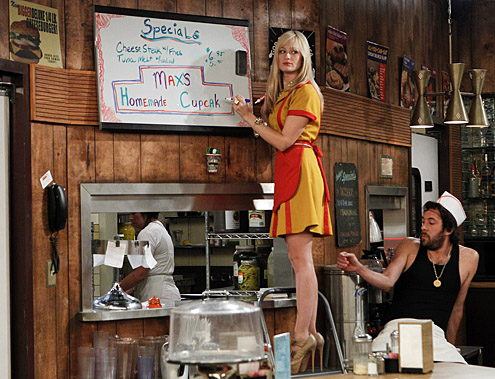
Next up were “The Gang Goes to the Jersey Shore” and “Frank Reynolds’ Little Beauties,” two solid episodes that were elevated by a handful of great lines and typically strong performances. It also marked the return of side characters like Artemis and the Waitress, checking in on where they are at the start of the new year (for Artemis, much the same, and for the Waitress, doing ecstasy on the Jersey Shore, a new all-time low). For a show that only gets a few scenes for auxiliary players per season, these two episodes did a good job of using the two actresses and reminding the audience how deep the bench goes for this show.
“Sweet Dee Gets Audited” should have made more of an impact, considering it ends with the characters saying this is the “darkest thing we’ve ever done.” That thing is staging a fake funeral for the baby Dee gave up for adoption at the tail end of last season. It’s always amusing to see Dee’s delusions of cleverness crushed by reality, but the background to this whole episode – an attempt at democracy manipulated by Frank and Dennis to get the bar decorated to their liking – is pretty flat and uninspiring. In fact, the Dee plot would have probably worked a bit better as a B-story, because the baby’s funeral really doesn’t provide that strong of a conclusion for the episode. And while it may be dark, the show is careful to introduce another character (the IRS agent auditing Dee) to react with suitable human disgust and horror when the whole thing goes wrong and the “baby’s” casket is opened to reveal the rotten corpse of a dog from the alley next to the bar. Shame that an image like that doesn’t leave more of an impact.
But following that strong opening four, “Frank’s Brother” showed that there is a limit on what the show can do. I personally enjoyed “The Gang Cracks the Liberty Bell” and “The World Series Defense” for their chance to hear the storytelling ability of the characters. Each paper-thin character or anachronistic phrase made perfect sense coming from Charlie, Dennis, Mac, and Dee. But Frank’s story is meant to be true, so when things don’t add up, it feels like a cheat – the writers aren’t playing fair. Sure, it’s funny to imagine that the mid-60’s Danny DeVito “looks like a 12-year-old,” and seeing that the name “Shadynasty” spelled out makes up “Shady Nasty,” but a few jokes like that can’t make up for a plot that ultimately goes nowhere and has nothing to do with Frank’s brother at all.
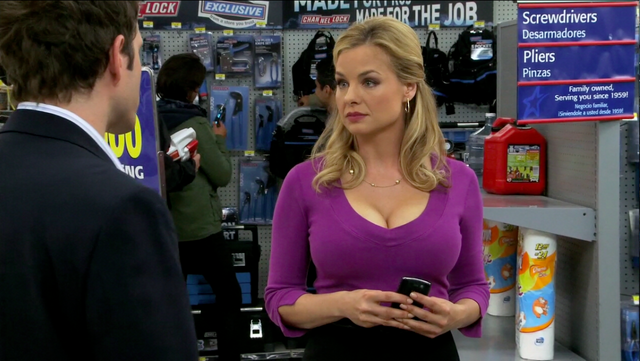
“The Storm of the Century” was purely mediocre. As an episode it barely hangs together, working much better as a series of funny scenes and concepts. The hurricane framework, especially considering Hurricane Irene did indeed bypass the Northeast with little incident, lends almost no urgency. And benching Mac for the lion’s share of the episode, even if it is balanced by the punchline of seeing him sitting safely without the Gang, eating ice cream and watching television from the bar, leads to a mismatched ensemble. Dee’s shrill fear of the storm returns her to the less dynamic shrewish archetype she hasn’t played since the first season. Again, this is subverted by the ending of the episode, but that doesn’t make her come across as any funnier. Charlie and Dennis have some spectacular material when they pursue a large-breasted TV anchor and later a few young attractive women shopping in a Home Depot-like home improvement store, but it works better as six or seven isolated minutes rather than as the A-story in an otherwise underwhelming 22 minutes. However, I will admit that this sends Dennis on a fantastic arc this season – and I believe his unhinging all starts here, when he is rejected by the news anchor and the young girls shopping for disaster supplies. His barely contained disgust for himself and the three women is as unsettling as it is funny.
Next up was “The Anti-Social Network,” another largely inconsequential episode held up by Dennis’ madness. Aghast at the thought that a random gin bar patron “shushed” him, Dennis drags Charlie along on an elaborate plot for revenge. Mac and Dee split off, looking for the “shusher” via Facebook in what turns into a “Catfish” parody. “Sunny’s” pop culture parodies have never been one of its stronger elements, so it’s no surprise that Dennis’ fury is far more fruitful than Mac and Dee’s unraveling of a vast online conspiracy. As he and Charlie enlist the help of the gin bar owners, the police, and a street cartoonist to help them track down the “shusher,” they become more and more wrapped up in their righteous fury. Charlie becomes fixated on the “shusher’s” “almond shaped eyes,” which can be added along with “people’s knees” to the list of physical attributes that drive him crazy. Dennis, on the other hand, reacts with an eerie determination. He will not stand to be insulted. Again, this just serves to build the intensity behind Dennis’ murderous edge.

The following episode, “The Gang Gets Trapped” might just have won the crown for my all-time least favorite “Sunny” episode. Once again, I appreciated their attempts to mess with typical structure, but it doesn’t quite work. Rather than have a long buildup to a bad idea, with all five characters at varying levels of interest and commitment, the episode cuts straight to the fallout. The opening finds Dee and Dennis trapped in a woman’s closet as she packs for a trip, after sneaking inside to steal an artifact her family won in an auction. It’s clearly intentional but no less disappointing that the characters pay lip service to Dennis’ passionate speech in favor of breaking in, or Mac and Charlie’s piqued interest due to a recent obsession with Indiana Jones. The whole thing feels like it takes place in the interim between the hilarious setup and the impact punchline. And while it might be a fun exercise for the writers to imagine what the characters get up to in between their outsized antics, it results in a rather unfulfilling half-hour.
Perhaps the most disappointing was “How Mac Got Fat.” With a title like that, you could expect that the show would go wild. But the episode is actually repurposed footage from an aborted attempt at a script from season six. On first pass, the episode seems very funny, taking a tour of Mac’s fractured psyche, from his staunch Catholicism to his oddly homoerotic fascination with fitness and muscles, to his delusional self-image, to his impatience – all things that are ripe for laughs. But on second watch, the structure actually seems rather sloppy, relying on Mac’s confession as an expositional monologue forcing the bits and pieces from the old footage into the framework of this new story idea. Only the smaller things on the sidelines – the candy stuffed in Mac’s pockets as he reveals his newly fattened physique or Charlie’s turpentine-fueled dance in the back office as Dennis watches with a glassy, drugged out stare - land. Perhaps the show only needs to make the audience laugh, but with so few episodes per season, I’d prefer they focus on making episodes I can laugh at time and time again, not just once.
Things looked up the following week with “Thunder Gun Express,” a fun adventure around Philly featuring actual location shooting as the Gang attempt to make it to the action movie of the year. What worked well about this half-hour was the pairings and isolation of the different characters. Mac making fun of Dennis’ slow, methodical, needlessly creepy way of picking up girls spurs Dennis on to listen to the collection of tapes (tapes!) he’s made of his various romantic encounters, actually having a few moments of self-reflection. Of course all that’s undone in a moment when a good looking woman presents herself and Dennis reverts to his tried-and-true ways. But even that’s upstaged by the adventures of Mac, Dee, and Charlie after they leave Dennis stranded in traffic in order to get to the theater more quickly. For once, the writers take Fat Mac into consideration and leave him stranded on the sidewalk after Charlie and Dee slip through a narrow grate into the sewer. Frustrated and preoccupied with the thoughts of action heroes, Mac spies a nearby motorcycle and tries to ride off on it. The resulting sight gag is worth the price of admission. Meanwhile, in the sewer, Dee becomes trapped when her shoe gets caught in the ground. Best line? When Dee asks Charlie if she can just take his shoes until they get back up to dry land, he stubbornly refuses. “You’ll stretch them out!” he insists. “You’ll stretch them out.”
After careening so unpredictably throughout the season, the once promising idea of the Gang’s high school reunion approached as I faced it with trepidation. Sure, it looked like there would be plenty to look forward to, but when finding out about Frank’s past or the whole concept of Fat Mac fizzled out, it looked like high concepts were the kiss of death for “Sunny” episodes that made me laugh. Fortunately, the full hour made sure there was plenty of time to deliver on such a loaded premise. Callbacks bring back plenty of recurring characters like Rickety Cricket, plagued with wicked cases of ringworm and kleptomania, Fatty Magoo, looking prettier than ever, and the Waitress, pathetically wandering around in the background, drunk and disappointed.
Hitherto unseen aspects of the characters were finally revealed. Dee is forced to don her torturous back brace, looking like something out of the early twentieth century, literally prohibiting her from any effortless movement, from turning her head to shrugging her shoulders. Finally, we learn Mac’s real name – a little bit of a letdown after so many years, but hey – and it turns out to be Ronald MacDonald. Luckily, the show knows not to stop there and also reveals that Mac was a rotten little snitch nicknamed “Ronnie the Rat.” Charlie devolves back into the unconfident, sniveling “Dirt Grub,” humiliating himself at every turn in order to somehow appeal to his more popular peers.
All that is upstaged by the climax of Dennis’ mania, which comes to a head after encountering the jocks who never respected him and the former friend he believes once slept with his prom date. When he fails to ingratiate himself or get revenge on them, his resulting fury is terrifyingly hilarious. Entering into a psychotic breakdown, he actually reveals what was always implied – a trunk full of creepy sado-masochistic gear that somehow includes both a camcorder and zipties. The rest of the Gang (as put off as the audience, though unable to find it as funny as we can) quickly talk him out of using “his tools” against his rivals.
Nothing, however, can outdo the final few minutes for pure humor. Throughout the hour, the Gang speaks reverently of their “Plan B,” only to be deployed under the direst of circumstances. When those circumstances are more than met, they are forced to go through with it – even though, as Dennis exclaims, it’s only a dance routine. But from top to bottom their manic, passionaite performance is hysterically funny - and that's before their delusions crash down around them, and everyone else at the reunion heads off to what sounds like a wicked afterparty. Once again, the Gang is left alone to go back to the bar. Back to the status quo.

Two more seasons have already been confirmed by creators and stars McElhanney, Day, and Howerton. Hopefully they can avoid some of the pitfalls they stumbled into this year. But despite this season’s weaker offerings, at no point has it felt as though the characters were weak or their chemistry diminished, but rather that what once seemed like endless possibilities for episodes wasn’t quite so endless after all.